Views: 0 Author: Site Editor Publish Time: 2026-08-07 Origin: Site


Tugboats and workboats operate under continuous, high-impact stress. They require heavy-duty fendering systems. These systems must prioritize structural integrity. They must also deliver reliable energy absorption. Basic cosmetic protection simply fails under such demanding conditions. Unplanned vessel downtime directly impacts fleet profitability. Hull damage often causes these costly operational delays. Fender failure is another leading cause of unexpected maintenance. Properly specified protective systems prevent these issues.
D-Type fenders serve as a primary defense line. Specifying the correct profile is critical. Selecting the right rubber compound ensures long-term operational success. This guide breaks down their mechanical advantages. We examine key evaluation criteria for procurement teams. We also explore the installation realities of standard rubber fenders. Fleet managers need evidence-based specification data. Marine procurement teams face similar challenges. You will learn how geometry and force distribution affect performance. Proper evaluation prevents catastrophic structural failures. By understanding these components, you can better protect your maritime assets.
Mechanical Efficiency: D-Type fenders offer a superior reaction-force-to-energy-absorption ratio compared to traditional cylindrical designs, making them ideal for heavy pushing and berthing.
Specification Matters: Procurement must evaluate rubber compound quality, compliance standards (e.g., BV certification), and dimensional tolerances to ensure long-term durability.
Installation is Critical: Even the highest-grade fenders will fail if fastening configurations and hull reinforcement are improperly matched to operational shear loads.
Application Specificity: While versatile, D-Type fenders must be weighed against W-Type or block fenders depending on the specific bow/stern geometry of the tugboat.
Workboats endure continuous friction during daily operations. They face extreme shear forces during ship-assist maneuvers. Barge-pushing creates intense point-loading on the hull. These dynamic environments test the limits of marine protection. Vessels constantly grind against concrete piers. They also rub heavily against larger steel ships. This continuous abrasion degrades standard materials quickly. Dynamic forces push protective equipment beyond basic design limits.
Standard fenders often fail in predictable ways. Inadequate materials lead to rapid tearing. Continuous pressure causes permanent deformation over time. Extreme shear loads frequently cause anchor bolt pull-out. This leads to subsequent hull fatigue. A compromised hull requires immediate and expensive dry-docking. Substandard compounds split open under diagonal impacts. These failures put the entire vessel at risk. We see uncertified units crumble after minor impacts. Crew safety diminishes when protective barriers fail.
A successful fendering solution meets strict success criteria. It must provide predictable compression cycles. The material must resist severe environmental degradation. UV rays and ozone break down weak polymers. Saltwater accelerates structural decay. High-grade materials resist these corrosive elements. The system must maintain structural integrity under severe diagonal impacts. You need materials capable of bouncing back instantly. Predictable performance ensures vessel safety during complex maneuvers. Quality protection guarantees uninterrupted operational schedules.
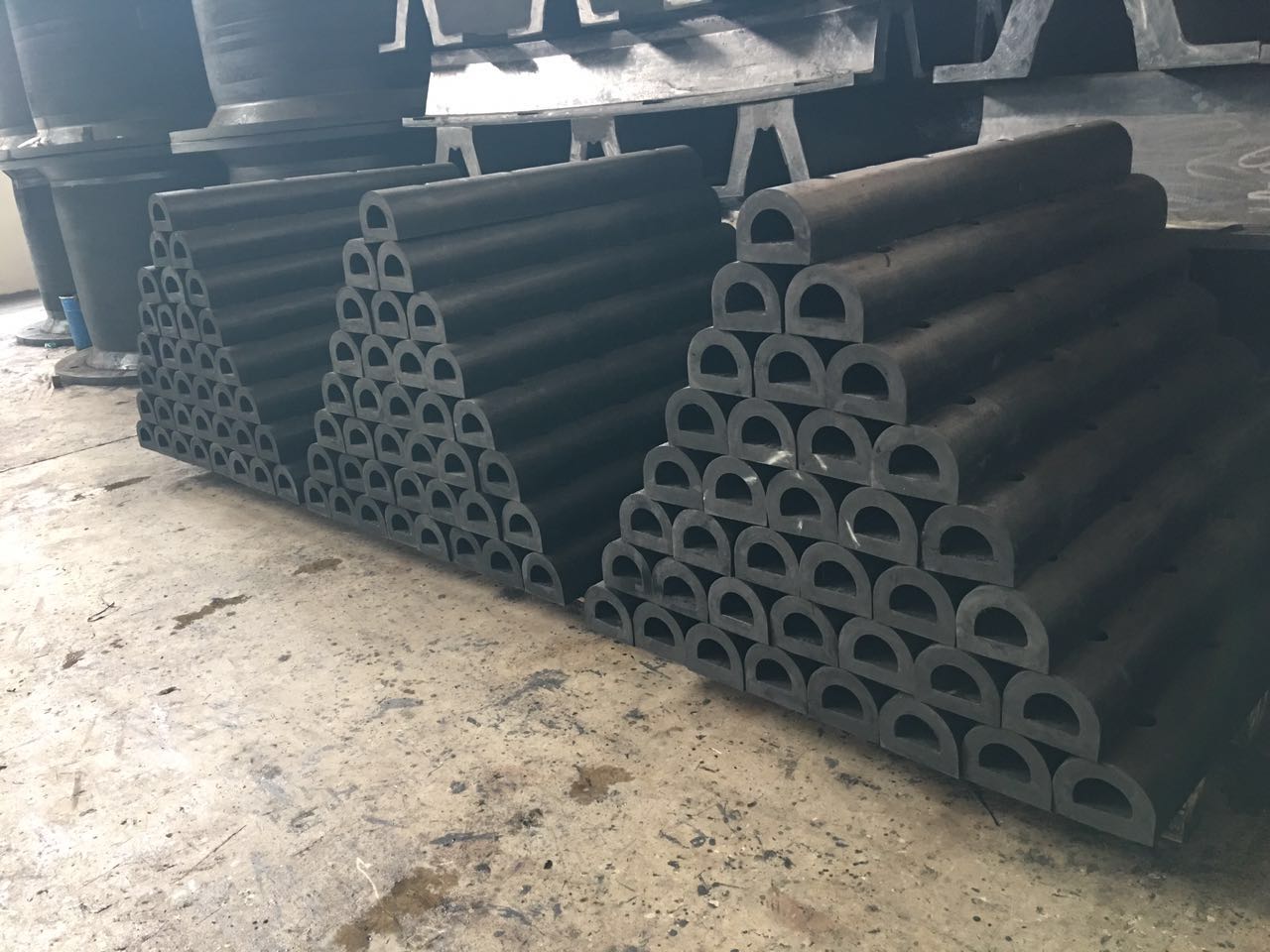
Geometry dictates mechanical performance in marine environments. The "D" profile allows for highly controlled compression. It absorbs kinetic energy incredibly well. It simultaneously keeps reaction forces strictly manageable. Flat outer surfaces distribute impact loads evenly. This geometry prevents localized hull stress. A hollow inner chamber provides necessary give. Upon impact, the chamber collapses predictably. It rebounds immediately once the pressure releases. This predictable cycle protects both vessels involved.
D-Type models come in two primary base configurations. Each serves specific mounting requirements.
Flat-Base (DD Fenders): These are optimal for flat hull sections. They feature a solid, flat mounting surface. You can easily install them using basic bolts. Flat-bar configurations secure them tightly to the hull. They resist twisting during horizontal friction.
D-Hole (DC Fenders): These feature a D-shaped inner chamber. This offers slightly different compression characteristics. The internal shape alters the energy absorption curve. It provides alternative mounting options for curved surfaces. You can thread retention chains through the center hole.
Workboats require protection across multiple vulnerable zones. You can install D-Type profiles along side belts. They function perfectly as lateral rub rails. They also wrap effectively around bow and stern perimeters. Operators frequently mount them on vertical pushing knees. This placement absorbs direct, head-on pushing forces. Their modular nature allows scalable replacements. You only replace damaged sections rather than entire belts. This modularity makes them an industry standard. Their adaptability suits almost any tugboat profile.
Procurement teams must enforce strict quality standards. Visual inspections cannot reveal polymer purity. You must demand scientific validation from manufacturers. Low-quality imports often flood the maritime market. These shortcuts compromise vessel safety.
Always avoid products making ambiguous recycled rubber claims. Recycled materials lack molecular cohesion. They cannot withstand heavy marine shear forces. You must focus on raw material specifications.
Tensile Strength: Demand high tensile strength data. This measures resistance to tearing under tension.
Elongation at Break: Check the elongation percentages. High elongation means the material flexes without snapping.
Abrasion Resistance: Verify abrasion resistance metrics. Continuous grinding against concrete requires superior abrasion scores.
Performance Curves: Demand verifiable energy absorption curves. Cross-reference them against reaction force data.
Third-party marine classifications guarantee reliable performance. Independent bodies test batches rigorously. This ensures consistency across massive production runs. Quality control prevents catastrophic failures at sea. As a benchmark example, specifying a Rubber Fenders,BV-Certified Gray D-Type Rubber Fender ensures rigorous batch testing. This specific compound prevents black marking on naval vessels. It preserves the aesthetics of luxury cruise ships during assists. Specialized operations demand these non-marking formulations. Certification provides absolute peace of mind.
You must match physical dimensions to vessel dynamics. Outer diameter dictates the physical standoff distance. The inner hole diameter controls the compression rate. Overall length must align with hull framing intervals. Match these dimensions to the vessel displacement tonnage. Heavier vessels require larger outer diameters. You must also calculate expected impact velocity. Higher velocities demand thicker profiles. Customized sizing prevents bottoming out during hard impacts. Accurate sizing ensures the system performs as engineered.
Even premium materials fail if installed incorrectly. Fastening configurations dictate overall system longevity. Hull reinforcement is equally critical. You must match installations to expected operational shear loads.
Evaluate different mounting strategies carefully. Internal flat bar anchoring offers massive holding power. You insert a steel bar inside the hollow chamber. Bolts pass through the bar into the hull. This spreads the clamping force evenly. It prevents the bolt heads from tearing through. Heavy-duty applications sometimes require external support. You can use external chains or heavy-duty straps. Straps support the sheer weight of massive profiles. They prevent gravity from tearing the mounting holes over time.
Longitudinal friction generates extreme shear stress. This occurs when vessels slide against each other. You must space pre-drilled holes properly. Incorrect spacing concentrates stress on individual bolts. Select anchor bolts based on environmental conditions. Stainless steel resists corrosion but costs more. Galvanized steel offers strength but degrades faster in saltwater. Proper bolt selection prevents pull-out during aggressive maneuvers. Always use oversized washers to distribute load.
Vessels must possess adequate structural readiness. Never install heavy profiles on thin steel plating. You must reinforce the vessel backing plates. Thick steel plates handle transferred reaction forces. Weak hulls will buckle under standard fender compression. Welding horizontal stringers behind the mounting zone adds rigidity. This preparation ensures the hull survives the impact. Proper reinforcement prevents internal structural cracking.
Establish a strict baseline for visual inspections. Crews should check for surface tearing weekly. You must torque-check anchor bolts monthly. Vibrations cause bolts to loosen gradually. Loose bolts accelerate structural tearing. Learn to identify end-of-life permanent deformation. If the profile fails to rebound, replace it immediately. Flattened profiles transfer kinetic energy directly into the hull. Timely replacement prevents larger repair bills.
Fleet managers face multiple design choices. Each profile serves a specific mechanical purpose. You must weigh D-Type models against alternatives. The correct choice depends on vessel geometry.
Feature | D-Type | Cylindrical | W-Type (M-Type) |
|---|---|---|---|
Mounting Surface | Flat and stable | Curved, requires brackets | Flat base, dual legs |
Shear Load Stability | High | Moderate (prone to rolling) | Very High |
Energy Absorption | Predictable and controlled | Massive at large scales | Excellent distribution |
Primary Application | Side belts, standard pushing | Extreme bow wrapping | Extreme bow-pushing |
Installation Complexity | Low to Moderate | High (chains/brackets) | Moderate |
D-Type models offer superior flat-surface mounting. They maintain a lower, less intrusive profile. They remain highly stable under heavy shear loads. The flat base prevents rolling during lateral movement. Cylindrical models behave differently under stress. They excel at extreme bow wrapping. They offer massive energy absorption at large scales. However, they require complex chain and bracket installations. Cylinders tend to roll under lateral friction. This rolling action sometimes damages suspension chains.
Use D-Type for standard side-protection. They handle general pushing duties exceptionally well. They provide cost-effective perimeter defense. W-Type models serve a different specialized function. Engineers design them specifically for extreme bow-pushing. They feature a unique dual-leg configuration. This design provides higher grip against flat surfaces. It distributes impact across a wider hull area. They are heavier and more expensive. Reserve W-Types for dedicated pushing knees.
Decision logic should remain practical. Choose D-Type for extensive side-belting. Use them for secondary pushing points. They offer cost-effective and scalable replacement options. Their versatility lowers inventory requirements for fleets. You can stock one profile size for multiple vessels. Reserve Cylindrical or W-Type for specialized primary contact points. This hybrid approach optimizes both performance and budget.
Specifying the right protective system requires careful balancing. You must evaluate mechanical shapes against operational needs. Compound purity dictates long-term performance. Installation mechanics play a critical role in survival. You must weigh these factors against your exact operational profile. Improper specification leads to continuous repairs. A well-designed system protects your fleet for years.
Procurement teams must take immediate, data-driven steps. First, prepare accurate vessel displacement data. Second, calculate your required standoff distances. Third, gather detailed hull curvature diagrams. These metrics inform exact engineering requirements. Stop relying on outdated purchasing habits. Base your decisions on verifiable material science.
Take action to secure your fleet today. Request comprehensive engineering drawings from manufacturers. Ask for certified performance curves detailing energy absorption. Demand customized quotes for certified D-Type fendering systems. Protecting your vessels ensures operational readiness and fleet safety.
A: Professionals call them marine rubber fenders, rub rails, or bumping profiles. Commercial-grade systems use extruded or molded polymers designed to absorb massive kinetic energy. They differ significantly from recreational boat bumpers, which are typically air-filled PVC. Commercial profiles protect structural integrity during heavy maritime operations.
A: A high-quality profile typically lasts between 5 and 15 years. Lifespan depends heavily on operation frequency and impact severity. UV exposure and saltwater degradation also reduce longevity. Proper maintenance, like checking bolt torque and inspecting for tears, extends their useful life significantly.
A: Yes, manufacturers can pre-curve them during production. This thermal molding process ensures structural integrity matches the hull's radius. Cold-bending them during installation is possible but has strict limits. Forcing a tight curve causes internal stress, leading to premature splitting.
A: Gray profiles use a specialized non-marking compound. Standard black carbon degrades and leaves dark streaks on hulls. Gray variants prevent these aesthetic damages. Tugboats servicing luxury cruise ships, superyachts, or naval vessels strictly require non-marking systems to preserve the assisted vessel's exterior finish.