Views: 0 Author: Site Editor Publish Time: 2025-12-24 Origin: Site


Choosing the right rubber fender for your marine or industrial needs is an essential decision for ensuring the safety and longevity of your infrastructure. A rubber fender plays a crucial role in protecting vessels, docks, and piers during docking, reducing the damage from impacts and ensuring smooth operations. In this article, we will guide you through the process of selecting the right rubber fender for your specific applications, explain the key characteristics to look for, and highlight the different types of rubber fenders available on the market.
By the end of this guide, you will have a deeper understanding of the factors to consider when choosing a rubber fender and be equipped with the knowledge to make an informed choice for your facility. Let’s dive into the essential aspects of selecting a rubber fender that will best meet your needs.
A rubber fender is a marine component designed to absorb and reduce the force of impacts between a vessel and a dock, pier, or other hard surface. The primary role of the rubber fender is to protect both the vessel and the infrastructure from damage during docking and berthing processes. These fenders are typically made from durable rubber or elastomeric materials and are commonly used in ports, harbors, and marine terminals.
The rubber fender works by compressing upon impact, absorbing the energy generated when a vessel docks. This helps reduce the force transmitted to both the vessel’s hull and the docking structure, thereby preventing costly damage and extending the lifespan of both. The key characteristics of a rubber fender include its elasticity, durability, and resistance to abrasion, all of which play a significant role in its effectiveness.
When selecting a rubber fender, there are several key characteristics to consider to ensure that it meets the specific requirements of your application. The right fender should provide adequate energy absorption, have a long lifespan, and be suitable for the operating conditions of your facility.
The material used in a rubber fender directly impacts its elasticity, durability, and performance. High-quality rubber or elastomeric compounds are essential for ensuring that the fender can withstand repeated impacts without deteriorating. The rubber fender should be flexible enough to absorb energy efficiently but firm enough to provide adequate protection.
A rubber fender with superior elasticity will compress and recover its shape after impact, ensuring consistent performance over time. This characteristic is vital in ensuring the fender’s ability to handle continuous and varying loads.
Tensile and compression properties refer to the strength and flexibility of the fender material. The tensile strength measures the material’s resistance to being stretched or torn, while compression properties indicate how well the fender can absorb and distribute impact forces.
A rubber fender with high tensile strength can resist wear and damage over time, while excellent compression properties enable it to absorb impact energy efficiently. It is crucial to choose a fender with the right balance of these properties based on the expected forces in the docking area.
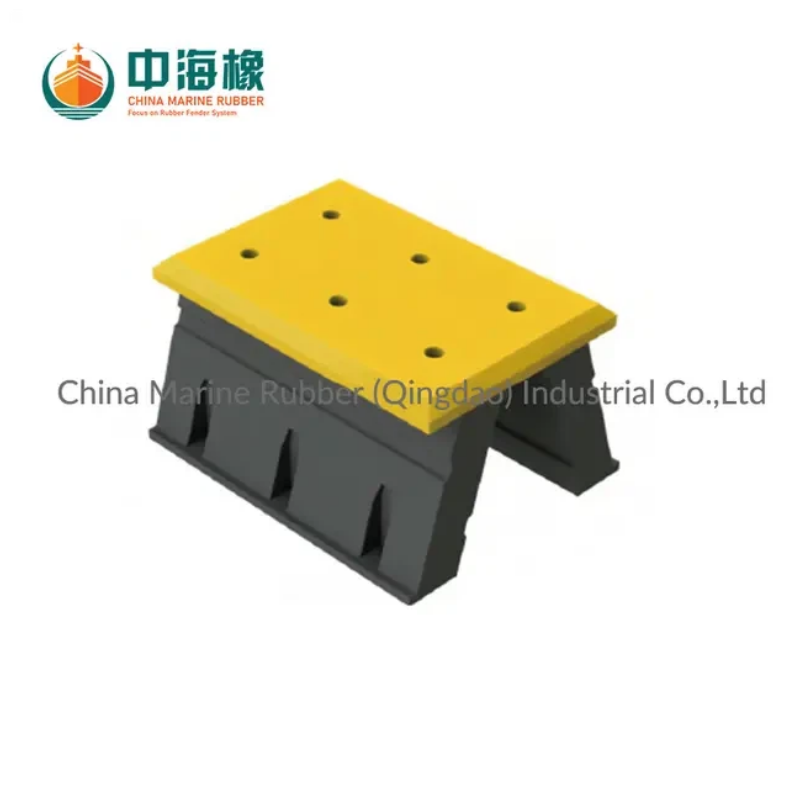
There are several different types of rubber fenders, each designed for specific applications. Understanding the differences between them will help you select the best option for your needs.
The D-type fender is one of the most commonly used types in marine environments. It is characterized by its D-shaped profile, which allows it to absorb impact forces while providing low reaction forces. The D-type fender is ideal for both small and large vessels and is often used in ports, terminals, and docks where space is limited.
Pros:
Cost-effective and widely available.
Suitable for a variety of applications.
Offers efficient energy absorption.
Cons:
May not provide as much energy absorption as other fender types in high-impact situations.
The arch fender is another popular type, especially in environments where space efficiency is a priority. It features a V-shaped or arch-like design that allows for better compression and energy absorption. The arch fender is often used in high-traffic docks and harbors where vessels of varying sizes are regularly docked.
Pros:
Highly efficient in absorbing energy.
Space-efficient design, ideal for narrow or crowded docking areas.
Suitable for high-traffic areas.
Cons:
May require more customization for specific installations.
The cylindrical rubber fender is another option that is commonly used for protecting vessels and infrastructure in marine environments. It has a simple cylindrical shape and is typically used in larger docking areas where the forces of impact are significant.
Pros:
Easy to install and maintain.
Versatile and suitable for various docking configurations.
Provides excellent energy absorption.
Cons:
Bulkier design may require more space.
Not as space-efficient as other fender types, such as the arch fender.
The super arch and cell fenders are designed for heavy-duty applications and are used in areas where the impact forces are much higher, such as large cargo terminals or shipyards. These fenders provide superior energy absorption and are capable of withstanding extreme impacts.
Pros:
Excellent energy absorption capabilities.
Ideal for heavy-duty applications and high-impact environments.
Can withstand high vessel loads.
Cons:
Larger and more expensive compared to other fender types.
When selecting a rubber fender, it’s important to consider the specific application and the conditions of the docking area. Choosing the right type of rubber fender ensures optimal protection for both vessels and infrastructure.
For small vessel berths, D-type fenders and cylindrical fenders are often sufficient. However, for large vessel berths, more heavy-duty options such as arch fenders or super arch fenders may be required to provide the necessary protection.
In high-traffic areas, where vessels are frequently docking, arch fenders and super arch fenders are ideal due to their high energy absorption and durability. For low-impact docks, D-type fenders or cylindrical fenders may be more than sufficient, offering cost-effective solutions without compromising safety.
Proper installation and maintenance of rubber fenders are crucial for maximizing their lifespan and ensuring optimal performance.
The mounting technique of a rubber fender plays a vital role in its performance. Fenders should be installed securely on the dock surface to ensure that they remain in place during the docking process. Additionally, the fender’s position should be optimized to align with the typical docking angles of vessels, ensuring that impact forces are absorbed efficiently.
To extend the service life of rubber fenders, it’s important to regularly inspect them for signs of wear and tear. Cleaning the fender periodically and ensuring it is free from debris can also help prolong its lifespan. Additionally, using high-quality materials during installation ensures that the fender can withstand harsh environmental conditions.
While it’s tempting to choose the most affordable option, it’s important to consider the long-term value of a rubber fender. Cheap fenders may initially seem cost-effective, but they could require more frequent replacements and repairs, ultimately costing more over time. A high-quality rubber fender may have a higher upfront cost but offers greater durability and a longer lifespan, providing better value in the long run.
In conclusion, selecting the right rubber fender for your marine or industrial application is a critical decision that directly impacts the safety and efficiency of your docking system. By understanding the key characteristics of different rubber fender types and matching the right fender to your specific needs, you can ensure long-lasting protection for both your vessels and infrastructure.
For reliable, high-quality rubber fenders, China Marine Rubber (Qingdao) Industrial Co., Ltd. (CMRQD) offers a range of products designed to meet the toughest marine requirements. Contact us today to learn more about our products and how we can help you find the right fender for your needs.
1. What is the main function of a rubber fender?
The main function of a rubber fender is to absorb and reduce the impact forces between a vessel and a dock, preventing damage to both.
2. What types of rubber fenders are available?
The main types of rubber fenders include D-type fenders, arch fenders, cylindrical fenders, and super arch/cell fenders, each designed for different applications.
3. How do I choose the right rubber fender for my dock?
Consider factors such as vessel size, the volume of traffic, space availability, and the environmental conditions when selecting a rubber fender.
4. How can I extend the lifespan of a rubber fender?
Regular inspection, cleaning, and proper installation are key to extending the service life of your rubber fender.