Views: 0 Author: Site Editor Publish Time: 2026-03-30 Origin: Site


A marine fender is a protective device installed on docks, quays, wharves, jetties, berths, and vessels to absorb the kinetic energy generated during berthing and mooring operations. In simple terms, a marine fender acts as a buffer between a ship and a fixed structure, or between two vessels, reducing impact forces and preventing damage to both sides. Without marine fenders, even a routine docking maneuver could result in costly structural damage, accelerated wear, safety risks, and operational delays.
Marine transportation is one of the most important parts of global trade, and ports handle ships of many sizes every day, from small tugboats to massive container vessels and oil tankers. Because vessels do not stop instantly and often berth under the influence of tide, wind, current, and human control limitations, contact forces during docking can be significant. This is exactly where the marine fender becomes essential. It is not just a rubber product attached to a dock. It is a carefully engineered safety component that protects infrastructure, vessels, cargo operations, and people.
In modern ports and marine facilities, the marine fender system is designed based on vessel size, berthing speed, approach angle, tidal range, structural conditions, and environmental factors. Choosing the right marine fender affects long-term maintenance costs, port efficiency, and overall safety performance. For this reason, understanding what a marine fender is, how it works, and which type is best for a specific application is very important for port owners, contractors, marine engineers, and procurement teams.
The core function of a marine fender is to absorb impact energy during berthing and distribute reaction force in a controlled way. When a vessel moves toward a quay or jetty, its kinetic energy must be safely managed. If the hull directly strikes the berth without proper protection, both the vessel and the structure may suffer damage. The marine fender compresses under load, absorbs energy, and reduces peak reaction force.
A well-designed marine fender system usually performs several key tasks:
As a vessel approaches a berth, its motion creates energy that must be dissipated. A marine fender deforms elastically and absorbs this energy, preventing a hard collision.
Marine fenders help spread contact forces over a larger surface area. This reduces local pressure on the ship hull and minimizes the chance of denting, cracking, or coating damage.
Quay walls, dolphins, jetties, and other marine structures are expensive to repair. A marine fender shields these structures from repeated impact and extends their service life.
Safe berthing means safer cargo handling, passenger movement, and marine operations. A reliable marine fender system lowers the risk of accidents and unexpected downtime.
Different ships have different hull forms, sizes, freeboards, and berthing conditions. Marine fenders can be selected and configured to suit these variables.
In busy ports, berthing is a daily operation. Even with skilled pilots and tug assistance, vessels are constantly exposed to environmental influences such as wind, wave motion, current, and tide variation. Because of these dynamic conditions, perfect contact control is impossible. A marine fender provides a necessary safety margin.
Without marine fenders, port operators would face:
Higher maintenance costs for docks and quay walls
Greater risk of ship hull damage
Increased interruption to loading and unloading operations
Lower operational reliability
Higher liability exposure in case of collisions
Marine fenders are therefore not optional accessories. They are critical engineering components for commercial ports, naval facilities, offshore terminals, shipyards, fishing harbors, ferry terminals, and tug berths.
Although marine fenders come in many types and designs, the basic principle is the same: controlled deformation under load. Most marine fenders, especially rubber fenders, are designed to compress when a vessel comes into contact with them. During this compression, the fender absorbs energy and converts some of that energy into internal strain, reducing the force transmitted to the structure.
Two performance indicators are especially important in marine fender selection:
This refers to how much berthing energy the fender can absorb. Higher energy absorption is generally needed for larger vessels or harsher berthing conditions.
This is the resisting force produced by the fender during compression. The reaction force must be controlled because too much force can damage the ship or the structure.
An ideal marine fender offers high energy absorption with relatively low reaction force. This balance is one of the most important reasons why marine fender design is a specialized engineering field.
There are many kinds of marine fender products used in ports and marine projects. Each type has its own design features, performance characteristics, and suitable applications.
The cell fender is one of the most widely used high-performance marine fenders in modern ports. It has a cylindrical body with a strong internal structure, offering excellent energy absorption and durability. Cell fenders are commonly used for large berths, container terminals, bulk terminals, and general cargo ports.
High energy absorption
Strong and stable structure
Suitable for large frontal panels
Long service life
Good performance for a wide range of vessel sizes
The cone fender is another advanced marine fender design known for high efficiency. Compared with traditional designs, cone fenders can often provide high energy absorption with compact size and stable performance under angular compression.
Excellent energy-to-reaction ratio
High shear stability
Efficient for modern berth design
Suitable for large vessels and demanding applications
Cone fenders are commonly selected for major commercial ports where high performance and optimized structural design are required.
The arch fender is a practical and economical marine fender often used in medium-duty and general-purpose berths. It has a simple structure and reliable performance, making it popular in smaller ports and industrial marine facilities.
Small and medium berths
Workboat docks
Barges and service vessels
Locations requiring durable, low-maintenance protection
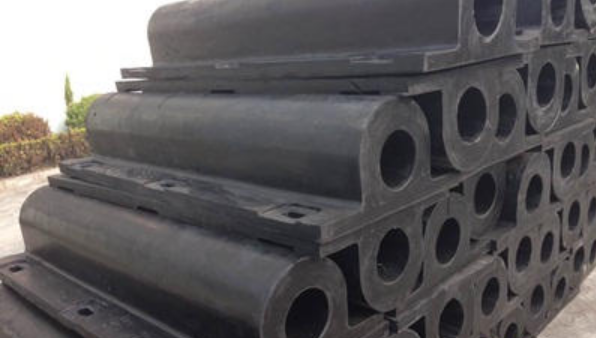
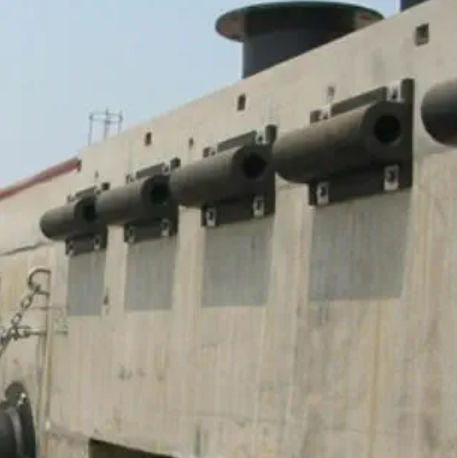
The D type fender is a simple rubber profile fender widely used on small vessels, piers, workboats, and wharves. Its shape is easy to install, and it provides effective contact protection for lighter-duty applications.
Simple structure
Easy installation
Cost-effective
Suitable for limited-impact environments
Square fenders are often used on tugboats, barges, and smaller marine structures. They offer a solid rubber profile and straightforward installation.
The keyhole fender is frequently used where easy mounting and secure attachment are important. It is suitable for quay edges, smaller docks, and other protective locations.
The cylindrical fender is one of the oldest and most traditional forms of marine fender. It is still widely used because of its versatility and simplicity. Cylindrical fenders can be installed with chains, bars, or ropes and are often found on small to medium berths.
Simple and versatile design
Easy handling and installation
Economical solution
Suitable for varied applications
Tug cylindrical fenders are specially designed for tugboats, which frequently make contact with larger vessels during towing and berthing assistance. These fenders are built to withstand repeated heavy-duty contact and harsh marine service conditions.
Leg fenders are used in applications requiring a specific contact geometry and reliable structural support. They are often chosen for specialized marine arrangements.
W fenders are commonly used on tugboats and vessels that need strong bow or stern protection. Their shape allows them to fit curved hull surfaces and withstand severe operational impact.
M fenders are heavy-duty marine fenders often used on tugboats, workboats, and exposed marine locations. Their grooved profile helps improve grip and installation flexibility.
Roller fenders are designed to guide vessels safely, especially at narrow channel entries, dry docks, lock approaches, and corners where ships need to move along a structure with reduced friction.
Lock entrances
Dry dock walls
Canal corners
Narrow maneuvering zones
A pneumatic fender is an air-filled marine fender that floats on water and provides highly efficient energy absorption. Pneumatic fenders are often used in ship-to-ship transfers, temporary berthing, naval operations, and ports needing flexible fendering solutions.
High energy absorption
Low hull pressure
Easy deployment
Suitable for ship-to-ship operations
Good performance under tidal variations
Foam fenders are another floating marine fender option. They usually consist of a foam core and a durable outer skin. Foam fenders provide good energy absorption, are unsinkable, and are suitable for ports, offshore platforms, and ship-to-ship operations.
In many heavy-duty marine fender systems, the rubber fender is combined with a frontal frame or frontal panel. This steel component is mounted in front of the rubber element and often covered with low-friction pads such as UHMW-PE.
The frontal panel serves several important purposes:
It spreads impact force over a larger area
It reduces hull pressure
It accommodates larger vessel contact surfaces
It improves overall system efficiency
In large quay installations, the marine fender is not just a standalone rubber unit. It is part of an integrated system that may include chains, anchor systems, frontal panels, and steel frames.
A complete berthing solution may include more than just the marine fender itself. Supporting equipment is also important for safety and functionality.
Marine ladders, including rubber ladders and stainless steel ladders, are often installed on quay walls, jetties, and marine structures to support emergency access and maintenance operations.
Bollards, such as tee head bollards, are used for mooring vessels securely at berth. Although bollards do not absorb impact like marine fenders, they are another essential part of a safe and efficient marine infrastructure system.
Marine fenders can be manufactured from different materials depending on their application, performance requirement, and environmental conditions.
Rubber is the most common material for fixed marine fenders. It provides elasticity, durability, weather resistance, and long service life. High-quality rubber compounds are especially important for ensuring stable performance in harsh marine environments.
Steel is widely used in frontal frames, frontal panels, chains, mounting hardware, and support structures. In marine environments, steel components usually require protective coatings and proper fabrication standards.
Foam-core floating fenders use specialized internal materials to provide buoyancy and impact absorption.
Pneumatic fenders rely on compressed air as the main energy-absorbing medium, supported by reinforced outer rubber construction.
Selecting the right marine fender requires more than simply choosing a product shape. Proper selection depends on engineering calculations and project-specific operating conditions.
Important factors include:
The displacement, hull shape, and operating profile of the vessel strongly affect fender selection. A berth serving small workboats requires a different solution from one serving large oil tankers.
This is one of the most important design parameters. It depends on vessel mass, approach velocity, eccentricity, and berthing configuration.
Facilities with frequent vessel traffic may require highly durable marine fenders with long fatigue life and minimal maintenance needs.
Tides, waves, currents, wind, and temperature can all influence fender performance and installation design.
The berth may be a solid quay wall, an open jetty, a dolphin system, or a floating structure. Different structures require different mounting and load distribution approaches.
Port owners usually want marine fender systems that remain reliable for many years under demanding conditions. Material quality and manufacturing standards matter greatly here.
A lower initial purchase price does not always mean lower long-term cost. A high-quality marine fender often reduces maintenance, replacement, and operational disruption over time.
Marine fenders are used in a wide range of environments:
Commercial ports
Container terminals
Bulk cargo terminals
Oil and gas terminals
Naval bases
Ferry terminals
Fishing ports
Inland waterway docks
Shipyards
Tugboat operations
Offshore platforms
Ship-to-ship transfer zones
Each application has its own operational demands, which is why marine fender engineering is highly specialized.
Not all marine fenders are the same. Because they work in harsh environments and directly affect safety, manufacturing quality is extremely important. A poorly made marine fender may fail prematurely, lose performance, or cause expensive damage.
When evaluating a marine fender supplier, buyers usually consider:
The rubber compound or other core material should be designed for marine service, weather resistance, fatigue performance, and long-term durability.
A reliable manufacturer should have sufficient production capacity, technical experience, and stable quality control systems.
Marine fender selection is not just a product purchase. It is an engineering decision. Good suppliers can support calculation, design recommendation, and project matching.
Recognized certifications and manufacturing standards help demonstrate consistency and credibility. For marine engineering projects, this is often a key factor in supplier qualification.
Even the best marine fender system should be inspected regularly. Proper maintenance helps ensure long-term performance and safety.
Typical maintenance tasks include:
Visual inspection for cracks, wear, or deformation
Checking anchor bolts, chains, and fixtures
Inspecting frontal panels and steel structures for corrosion
Reviewing performance after heavy berthing events
Replacing damaged accessories when necessary
Routine maintenance can extend the life of the marine fender system and reduce the risk of unexpected failure.
As ports become larger and more efficient, the marine fender industry continues to evolve. Buyers today are looking for products that offer better durability, better engineering performance, and lower life-cycle costs.
Some important trends include:
Modern ports increasingly prefer advanced solutions such as cell fenders and cone fenders for demanding berthing conditions.
More projects now use complete systems that combine rubber fenders, frontal frames, frontal panels, chains, and related steel components.
International buyers expect certified manufacturing, documented quality systems, and reliable compliance with engineering requirements.
More owners recognize that marine fender quality affects safety, maintenance cost, and operating efficiency over many years.
A marine fender is far more than a simple protective buffer. It is a critical marine engineering product designed to absorb berthing energy, reduce impact force, protect vessels and structures, and improve the safety and efficiency of port operations. From cell fenders and cone fenders to pneumatic fenders, foam fenders, and tugboat fender systems, each marine fender type serves a specific purpose in the maritime industry.
Choosing the right marine fender requires careful consideration of vessel type, berth conditions, environmental influences, and long-term operational needs. For ports, contractors, and marine project owners, investing in a high-quality marine fender system is essential for protecting infrastructure and ensuring reliable performance.
For companies seeking dependable marine fender solutions, it is important to work with an experienced manufacturer that understands both product quality and engineering requirements. China Marine Rubber (Qingdao) Industrial Co., Ltd. (CMR) is a professional manufacturer specializing in marine rubber fenders, engineering rubber products, and steel structure products. With a broad product range including Cell Fender, Cone Fender, Arch Fender, D Type Fender, Cylindrical Fender, Pneumatic Fender, Foam Fender, frontal panels, ladders, and bollards, CMR is committed to delivering excellent products, reliable quality, and genuine service to customers worldwide.
The main purpose of a marine fender is to absorb impact energy when a vessel berths or moors, thereby protecting both the ship and the dock structure from damage.
A marine fender absorbs berthing impact, while a bollard is used to secure mooring lines and keep the vessel in position after berthing.
There is no single answer for every project, but cell fenders and cone fenders are commonly used in large commercial ports because of their high energy absorption and efficient performance.
Not necessarily. Pneumatic fenders are excellent for floating and ship-to-ship applications, while fixed rubber fenders are often better suited for permanent quay and berth installations. The best choice depends on the application.
The service life of a marine fender depends on material quality, operating conditions, installation quality, and maintenance. A well-manufactured marine fender with proper maintenance can provide reliable service for many years.