An arch fender is an essential piece of equipment used in marine and industrial settings, particularly at ports, terminals, and docks, to protect both ships and infrastructure during docking. As ships dock, they create significant force against the quay, and the arch fender absorbs these impacts, safeguarding both the vessels and the docking infrastructure. This article will provide an in-depth explanation of what an arch fender is, how it works, and why it is a preferred solution in various marine applications.
Understanding the role of arch fenders is crucial for port operators, shipbuilders, and marine engineers. These fenders are designed to handle high-energy impacts and are an excellent choice for environments that deal with large vessels. This article will explain the basic morphology of arch fenders, their features, benefits, and how they compare to other fender designs. Additionally, we will explore the critical factors to consider when selecting the right arch fender for your application.
An arch fender is a type of marine fender characterized by its unique V-shaped or arch-like design. The design helps absorb impact forces from vessels docking at high speeds or under high pressure. The arch fender’s morphology is highly effective in absorbing and distributing the energy generated during the vessel's contact with the dock.
The V-shape or arch structure is what sets the arch fender apart from other types of fenders. The shape allows the fender to compress and distribute the energy evenly across the surface, reducing stress on both the ship and the dock. This compression capability ensures that the forces are spread over a larger surface area, minimizing the damage that can result from direct impact.
The key working principle of an arch fender lies in its ability to absorb and dissipate energy. When a ship approaches the dock and makes contact with the arch fender, the fender compresses and absorbs the energy from the impact. This reduces the amount of force transferred to the dock structure, minimizing the risk of damage. The compression ratio and material flexibility of the fender are critical factors in determining how effectively it can absorb the energy of the impact.
Unlike other types of fenders, arch fenders maintain a low reaction force. This means that the amount of force exerted by the fender onto the dock is minimal, preventing excessive stress on the dock structure. This ability to absorb energy efficiently while maintaining low reaction forces makes arch fenders ideal for environments with heavy vessel traffic.
Arch fenders are used in a wide range of applications, particularly in marine environments where ships regularly dock at piers, docks, and terminals. Below are some of the most common uses for arch fenders in the marine industry:
Marine berths and piers are some of the busiest areas in any port or harbor. Ships come and go, and the impact forces from docking vessels are constant. In these high-traffic areas, arch fenders provide excellent protection for both the vessels and the infrastructure. The fenders ensure that the docks can withstand the repeated impacts caused by vessels, preventing damage to the port and maintaining the safety of ships during the docking process.
Ports, terminals, and cargo docks are key parts of the global trade network, handling large volumes of cargo daily. Given the variety of vessels that dock at these locations, arch fenders are essential in absorbing the force generated by ships of different sizes and weights. Whether it’s a small cargo vessel or a massive container ship, arch fenders provide the necessary protection to ensure that the infrastructure and vessels remain intact during docking.
In certain areas, such as narrow docking spaces or locations where space is limited, the design of the arch fender is particularly advantageous. The compact nature of the fender allows it to absorb significant energy without taking up excessive space. This makes arch fenders a perfect solution for environments where maximizing available space is a priority, such as in ports with constrained docking areas or in areas with high vessel traffic.
There are several key features of arch fenders that make them a preferred choice for marine environments. These features contribute to the fender’s high performance, low maintenance, and long lifespan. Below are the main benefits of arch fenders:
One of the standout features of arch fenders is their high energy absorption capacity. The V-shape design allows for efficient compression and energy absorption when a ship makes contact with the fender. This reduces the reaction force against the ship or the dock, preventing damage to both parties. The ability to absorb large amounts of energy without transferring excessive force makes the arch fender ideal for high-impact scenarios.
Arch fenders are known for their easy installation and low maintenance requirements. Once installed, these fenders can provide reliable protection for many years with minimal upkeep. The robust materials used in their construction ensure that they can withstand harsh environmental conditions, including saltwater exposure and heavy ship traffic. This durability reduces the need for frequent repairs or replacements, making arch fenders a cost-effective solution for port operators and maritime facilities.
The compact design of arch fenders makes them an excellent choice for environments where space is limited. Unlike other fender types that may be bulkier or require more room to function effectively, arch fenders offer the same level of protection while taking up less space. This is particularly beneficial in areas where maximizing available space is essential, such as smaller docks or crowded port areas.
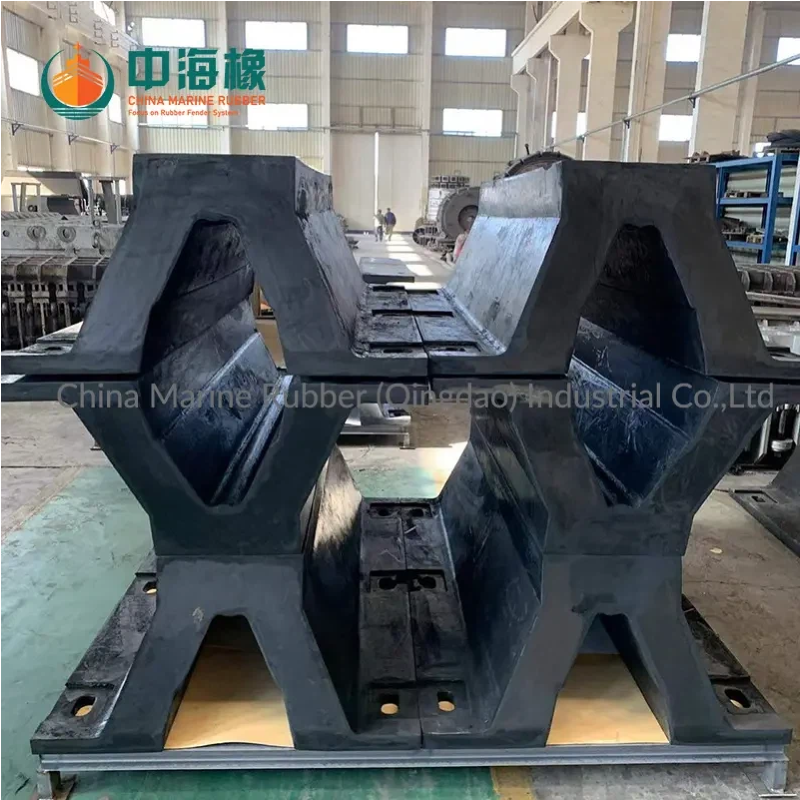
When selecting a fender for your docking needs, it’s important to understand how arch fenders compare to other types of fenders, such as V-shape fenders, cylindrical fenders, and foam-filled fenders. Below are some key differences between arch fenders and other common fender types:
Both arch fenders and V-shape fenders feature a V-shaped structure, but they differ in performance and design. Arch fenders are generally more flexible and capable of absorbing larger amounts of energy, making them suitable for high-impact situations. V-shape fenders, while effective in certain scenarios, may not offer the same level of energy absorption or low reaction force as arch fenders.
Cylindrical and foam-filled fenders are also commonly used in marine environments. However, these types of fenders tend to be bulkier and may not be as space-efficient as arch fenders. While cylindrical and foam fenders are effective in absorbing energy, they do not offer the same compression and flexibility as arch fenders, making them less ideal for high-traffic or space-constrained environments.
Selecting the right arch fender for your application is crucial for ensuring optimal performance and protection. There are several factors to consider when choosing an arch fender, including:
The size of the arch fender and its compression ratio are key considerations. The compression ratio determines how much the fender will compress when impacted, and selecting the right ratio ensures that the fender can handle the specific impact forces from the vessels in your facility. The installation surface also plays an important role in ensuring that the arch fender is properly fitted and functions optimally.
The quality of materials used in the construction of the arch fender is another important factor. Fenders made from high-quality rubber and polymer compounds are more durable and resistant to wear, ensuring long-term performance even in harsh environments. A higher-quality material will also provide better energy absorption and maintain its structural integrity over time.
In conclusion, arch fenders offer a highly effective solution for protecting both ships and dock infrastructure in marine and industrial environments. Their unique V-shaped design, high energy absorption, low reaction force, and space-efficient structure make them ideal for high-traffic ports, terminals, and limited-space mooring environments. By choosing a high-quality arch fender from a trusted manufacturer like CMRQD, you can ensure long-term protection and durability for your docking systems.
For more information on arch fenders or to inquire about our product range, please contact us at China Marine Rubber (Qingdao) Industrial Co., Ltd. We specialize in providing top-quality marine fenders and engineering rubber products to meet the needs of clients worldwide.
1. What makes an arch fender different from other types of fenders?
The arch fender has a V-shaped design that provides better energy absorption and lower reaction forces compared to cylindrical and foam-filled fenders, making it ideal for high-impact scenarios.
2. What types of environments are arch fenders best suited for?
Arch fenders are most effective in high-traffic ports, terminals, and docking areas with limited space, where their compact design and energy absorption capabilities are crucial.
3. How does an arch fender absorb energy?
The unique V-shaped design of the arch fender allows it to compress upon impact, absorbing and distributing the energy across a larger surface area, thus reducing the force transmitted to the dock or ship.
4. What should I consider when choosing an arch fender for my dock?
When choosing an arch fender, consider the size, compression ratio, installation surface, and the quality of materials used in the construction to ensure optimal performance for your specific application.