Views: 0 Author: Site Editor Publish Time: 2025-12-29 Origin: Site


The D-type rubber fender is one of the most widely used types of fenders in the marine industry. Its versatility, durability, and ease of installation make it an ideal choice for a wide range of marine applications, from small docks to large vessel berths. In this article, we will explore what a D-type rubber fender is, why it is popular, and how it compares to other types of fenders. By understanding its design, benefits, and typical use cases, you can make an informed decision when selecting a rubber fender for your marine operations.
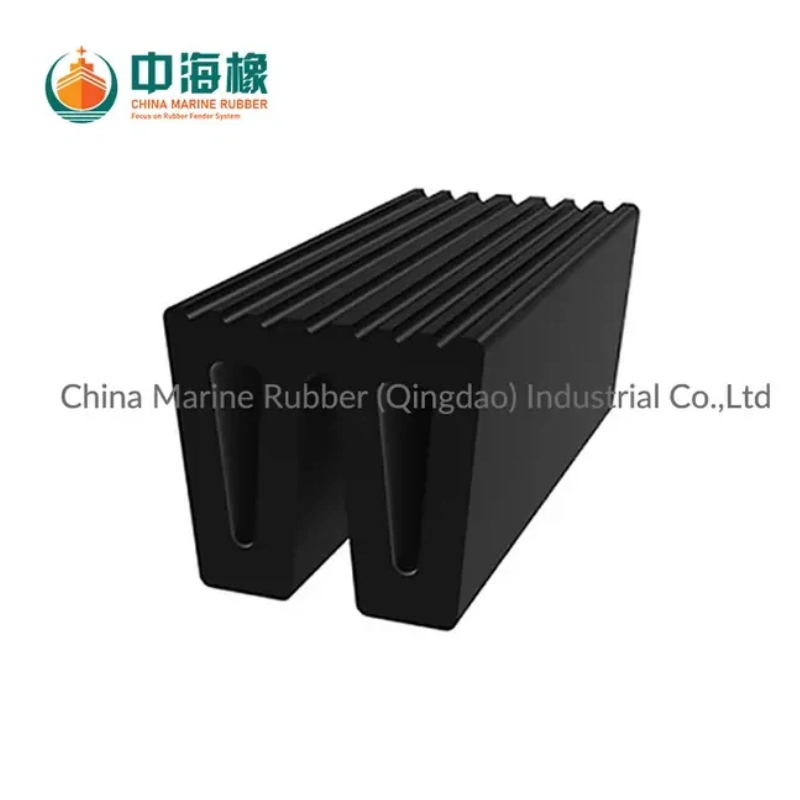
The D-type rubber fender gets its name from its distinctive D-shaped profile. This shape is designed to provide an optimal combination of energy absorption and low reaction force, making it one of the most effective fenders for protecting vessels and docks. The D-type rubber fender is typically made from high-quality rubber or elastomer materials, which are known for their resilience and ability to withstand repeated impacts.
The D-type rubber fender features a simple yet effective design that resembles the letter "D." The rounded part of the "D" faces outward, providing a cushioning effect when a vessel comes into contact with the dock or berth. This shape allows the fender to absorb the impact energy efficiently while minimizing the force exerted on both the ship and the dock structure. The D-type fender is often mounted horizontally, with the flat surface positioned against the dock and the rounded side facing the vessel.
The primary role of a D-type rubber fender in marine protection systems is to absorb and dissipate the energy generated when a vessel docks. As ships are subject to significant forces during berthing, the fender helps to reduce the impact on both the ship’s hull and the dock. By cushioning the vessel’s movement and preventing direct contact with the dock, the D-type rubber fender plays a crucial role in preventing damage to both.
The flexibility and compression characteristics of the D-type fender allow it to absorb impact forces from ships of varying sizes, making it a versatile option for different types of docking environments. Its design is particularly effective in situations where there is limited space or a need for efficient energy distribution.
The performance of a D-type rubber fender depends on several key physical characteristics, including elasticity, shock absorption, and compression behavior. These properties determine how well the fender can handle impact forces and protect both the vessel and the dock.
One of the defining features of the D-type rubber fender is its elasticity. The fender’s material must be flexible enough to compress upon impact and then return to its original shape once the force has been absorbed. This elasticity helps to dissipate the energy from the impact, reducing the risk of damage to both the vessel and the dock.
The shock absorption capabilities of the D-type rubber fender are crucial in high-traffic areas, where vessels regularly dock at varying speeds and angles. The fender’s ability to absorb and distribute the energy from each impact helps prevent excessive wear on both the ship’s hull and the dock infrastructure.
Additionally, the compression behavior of the D-type fender plays an essential role in its performance. The fender is designed to compress upon impact, absorbing the energy and reducing the force transmitted to the dock. This compression helps to prevent damage to the dock structure while ensuring that the vessel remains safely secured during the docking process.
The D-type rubber fender is commonly used in various marine applications, particularly in docks, small ports, and vessel berths. Its versatile design and efficient energy absorption make it a popular choice in these settings.
The D-type fender is ideal for small docks and ports where space is limited, and efficiency is key. Its compact design and effective energy absorption make it suitable for protecting both small vessels and large ships. The fender is commonly installed along the perimeter of docks and berths to provide protection during the docking process.
In areas where space is at a premium, the D-type fender offers a space-efficient solution. Its simple design allows it to be installed in narrow docking areas without sacrificing performance. The D-type fender can be mounted in such a way that it provides maximum protection without occupying excessive space, making it a great choice for compact or crowded docking environments.
When selecting a fender for your marine application, it’s important to understand how the D-type rubber fender compares to other types of fenders. Each type has unique characteristics that make it suitable for specific applications.
While both the D-type fender and the arch fender serve similar functions, there are key differences between the two. The D-type fender is a more compact and straightforward design, making it ideal for smaller vessels and limited-space areas. In contrast, the arch fender features a V-shape, which allows for more flexible energy absorption and is better suited for high-traffic areas or larger vessels. The arch fender may offer greater energy absorption capabilities, but the D-type fender is often the more cost-effective and space-efficient choice.
The D-type rubber fender is often compared to cylindrical and cell fenders, both of which are commonly used in marine environments. While cylindrical fenders are typically larger and provide excellent energy absorption, they can be bulkier and require more space. Cell fenders, on the other hand, offer high-energy absorption but are often more expensive and require more maintenance. The D-type rubber fender, with its simple design, provides an effective middle ground—offering solid protection without taking up too much space or requiring extensive maintenance.
Like any product, the D-type rubber fender has both strengths and limitations that should be considered when selecting the right fender for your application.
One of the major advantages of the D-type fender is its ease of installation. Its simple design and straightforward mounting process make it a cost-effective solution for many docking environments. Additionally, the D-type rubber fender is adaptable and can be used in a wide variety of marine applications, from small ports to larger vessel berths.
While the D-type fender is a versatile and efficient option, it may not be suitable for all applications. For instance, in high-impact environments or areas where larger vessels dock, the D-type fender may not provide enough energy absorption. In such cases, other fender types, such as the arch fender or super arch fender, may be more appropriate. It’s essential to assess the load capacity and impact forces in your docking environment before choosing the D-type rubber fender.
In conclusion, the D-type rubber fender is a valuable choice for many marine applications due to its cost-effectiveness, adaptability, and efficient energy absorption. It provides excellent protection for vessels and docks in areas where space is limited and where the impact forces are moderate. By understanding its advantages and limitations, you can determine whether the D-type fender is the right choice for your docking needs.
For high-quality rubber fenders that offer excellent protection and long-lasting performance, China Marine Rubber (Qingdao) Industrial Co., Ltd. (CMRQD) is your trusted supplier. Contact us today to learn more about our range of marine fenders and how we can help meet your fendering needs.
1. What is a D-type rubber fender?
A D-type rubber fender is a marine fender with a D-shaped design that is used to absorb the energy from impacts between vessels and docking infrastructure.
2. What are the benefits of using a D-type rubber fender?
The D-type rubber fender is space-efficient, cost-effective, and provides excellent energy absorption, making it suitable for small ports, docks, and vessel berths.
3. How does a D-type rubber fender compare to other types of fenders?
The D-type rubber fender is more compact and easier to install than other fenders, such as cylindrical or cell fenders. However, for high-impact situations, other types of fenders like arch fenders may provide better performance.
4. Where are D-type rubber fenders typically used?
D-type rubber fenders are commonly used in small ports, docking areas with limited space, and for vessels of various sizes. They are ideal for environments where space efficiency and cost-effectiveness are important.