A rubber fender is an essential component in marine operations, designed to protect both vessels and docking infrastructure by absorbing impact forces during the docking and mooring process. These fenders play a crucial role in ensuring the safety and longevity of both ships and the docking facilities that accommodate them. Without effective impact protection, the potential for costly damage to the vessel or the dock increases dramatically, leading to unnecessary repair costs and operational downtime.
In this article, we will provide an in-depth explanation of what a rubber fender is, how it functions, the materials used in its construction, the various types available, and its most common applications in marine environments. We will also discuss the important factors to consider when selecting a rubber fender and how it contributes to the safety, efficiency, and durability of docking and mooring operations.
Understanding the importance of a rubber fender and selecting the right one for your needs is crucial for maintaining the safety of your vessels and docking infrastructure. This guide aims to provide the necessary information to help you make an informed decision when choosing a rubber fender.
A rubber fender is a protective component used in marine environments to absorb the kinetic energy generated when a vessel docks or makes contact with a dock, pier, or other structures. The rubber fender serves as a cushioning barrier between the vessel and the infrastructure, preventing both from sustaining damage during docking operations. By absorbing the impact energy, the fender helps prevent structural damage to both the ship’s hull and the dock, ultimately improving the safety and efficiency of marine operations.
When a vessel approaches a dock, it generates significant kinetic energy due to its mass and speed. The rubber fender compresses upon contact, absorbing this energy and preventing the direct transfer of force to the vessel or the dock. This energy absorption process ensures that the docking process occurs smoothly, reducing the potential for damage and minimizing the need for repairs.
The primary function of a rubber fender is to act as a shock absorber, protecting both the vessel and the dock. It is typically constructed from durable rubber or elastomer materials designed to withstand repeated impacts and harsh environmental conditions. These materials are engineered to have the necessary elasticity to compress under impact and return to their original shape afterward.
The effectiveness of a rubber fender largely depends on the materials used in its construction and the manufacturing processes that produce it. High-quality materials are essential for ensuring the durability and performance of the fender, particularly in harsh marine environments where exposure to saltwater, UV radiation, and other environmental factors is constant.
Rubber fenders are made from a variety of rubber compounds, each selected for specific performance characteristics such as elasticity, durability, and resistance to wear. The most common types of rubber used in rubber fenders include natural rubber, synthetic rubber, and elastomers. These materials are carefully blended to provide the ideal balance of flexibility, strength, and resistance to degradation over time.
Natural rubber, derived from rubber trees, is known for its excellent elasticity and abrasion resistance. However, in marine environments, synthetic rubber compounds such as EPDM (Ethylene Propylene Diene Monomer) or Nitrile Rubber (NBR) are often preferred due to their superior resistance to UV rays, saltwater, and ozone. These synthetic compounds also have enhanced durability, making them well-suited for the rigorous conditions of marine environments.
The manufacturing process of rubber fenders involves several key steps to ensure that the fender meets the required performance specifications. Typically, the process starts with mixing the rubber compounds, followed by molding the rubber into the desired shape. There are various techniques used in the production of rubber fenders, including extrusion, compression molding, and injection molding.
In extrusion, rubber is forced through a mold to create continuous profiles that can then be cut into the required lengths. Compression molding and injection molding are used for producing more complex shapes and sizes, which are ideal for fenders with specific design requirements. The manufacturing process ensures that the rubber fender maintains consistent quality, performance, and durability over time.
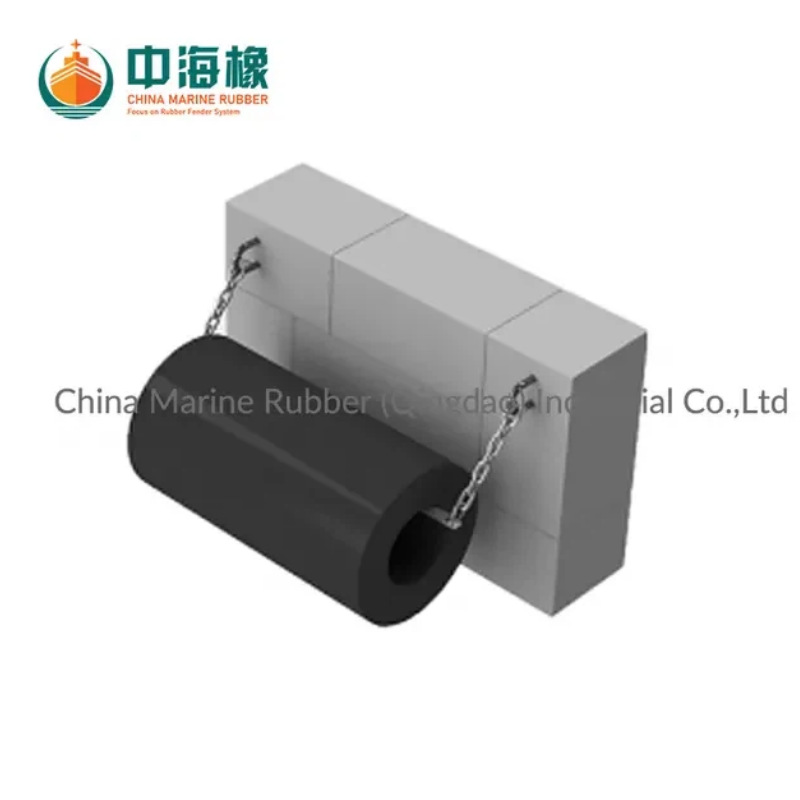
There are several types of rubber fenders, each designed for different applications in marine environments. Understanding the different types will help you select the most appropriate fender for your specific needs.
The most common types of rubber fenders include:
D-Type Rubber Fender: The D-type fender is a simple, cost-effective solution widely used in small to medium-sized docking areas. Its D-shaped profile allows it to absorb energy efficiently and is easy to install and maintain.
Arch Fender: The arch fender has a V-shape or arch-like design, which allows for greater flexibility and more efficient energy absorption. It is commonly used in high-traffic areas or environments where larger vessels dock.
Cylindrical Rubber Fender: This type of fender has a cylindrical shape and is designed for larger docking environments. It provides excellent shock absorption and is widely used in large commercial ports and terminals.
Super Cell Fender: Super cell fenders are high-capacity fenders designed for heavy-duty applications, such as large ships and deepwater terminals. They provide superior impact protection and are built to withstand extreme forces.
The use of rubber fenders offers numerous advantages in marine and industrial applications. Below are some of the key benefits:
Rubber fenders are designed to absorb shock and impact energy, which significantly reduces the risk of damage to both the vessel and the dock. This energy absorption ensures that the force of the impact is distributed evenly, preventing localized damage that could lead to expensive repairs.
In addition to shock absorption, rubber fenders are highly durable. Made from materials resistant to abrasion, UV radiation, and saltwater exposure, they are built to withstand the harsh conditions of the marine environment. This durability ensures that rubber fenders provide long-term protection with minimal maintenance.
Rubber fenders are also versatile. They can be customized to meet specific requirements in terms of size, shape, and material composition. Whether you need a fender for a small dock or a large commercial terminal, there is a rubber fender suitable for the job.
Rubber fenders are used in a wide range of applications, both in marine and industrial environments. Some common uses include:
Rubber fenders are essential in ports and piers, where ships dock regularly. They protect both the vessel and the infrastructure by absorbing impact forces. Offshore facilities, such as oil rigs and platforms, also rely on rubber fenders to prevent damage from vessel collisions.
In smaller docks and commercial berths, rubber fenders provide protection for smaller vessels. In larger terminals and high-traffic areas, more robust rubber fenders, such as arch fenders or super cell fenders, are used to withstand the greater forces generated by large ships.
In conclusion, rubber fenders play a critical role in marine and industrial operations by providing protection for both vessels and infrastructure. Their ability to absorb impact energy, coupled with their durability and versatility, makes them indispensable in various docking and mooring applications. Whether for a small dock or a large commercial port, there is a rubber fender suitable for every need.
For high-quality rubber fenders designed to meet the toughest marine demands, China Marine Rubber (Qingdao) Industrial Co., Ltd. (CMRQD) offers reliable, durable, and cost-effective solutions. Contact us today to learn more about our range of rubber fenders and how we can help you select the right fender for your operations.
1. What is a rubber fender?
A rubber fender is a protective component used to absorb impact energy and reduce the force between a vessel and a dock during docking.
2. What types of rubber fenders are available?
There are several types, including D-type, arch, cylindrical, and super cell fenders, each designed for different applications.
3. How do rubber fenders absorb impact?
Rubber fenders compress upon impact and return to their original shape, absorbing and dissipating the kinetic energy from the collision.
4. Where are rubber fenders typically used?
Rubber fenders are used in ports, piers, offshore facilities, and any other location where ships dock regularly, providing protection for both the ship and the docking infrastructure.