Views: 0 Author: Site Editor Publish Time: 2026-07-30 Origin: Site


A marine fender is not a single product; it is an engineered system designed to protect valuable maritime infrastructure. While the core rubber body absorbs tremendous kinetic energy, it cannot safely transfer that energy to modern, thin-hulled vessels on its own. Engineers rely on supplementary structures to manage this immense force.
Enter the frontal panel. This rigid steel component acts as the critical load-distribution mechanism in a modern berthing system. Proper panel design bridges a dangerous gap. It connects high-energy absorption capabilities directly with strict vessel hull pressure limits. Without it, even the best rubber fenders can cause severe damage to ships.
In this guide, you will learn exactly how frontal panels optimize berthing operations. We will explore the mechanical distribution of sheer forces and highlight essential engineering evaluation criteria. You will also discover practical procurement strategies. Applying these insights helps facilities mitigate liability and extend structural asset lifecycles.
Hull Pressure Management: Frontal panels distribute the high reaction forces of super cone fenders across a wider surface area, keeping hull pressure within safe, compliant limits (e.g., PIANC guidelines).
Friction Reduction: Integrated UHMW-PE (Ultra-High Molecular Weight Polyethylene) facing pads reduce shear forces during vessel berthing and vertical movement.
System Longevity: By absorbing direct impact and resisting environmental degradation, the steel panel protects the core rubber fender body from abrasive wear and mechanical tearing.
Custom Engineering: Panel dimensions and chain support systems must be custom-calibrated to site-specific tidal variations and expected vessel types.
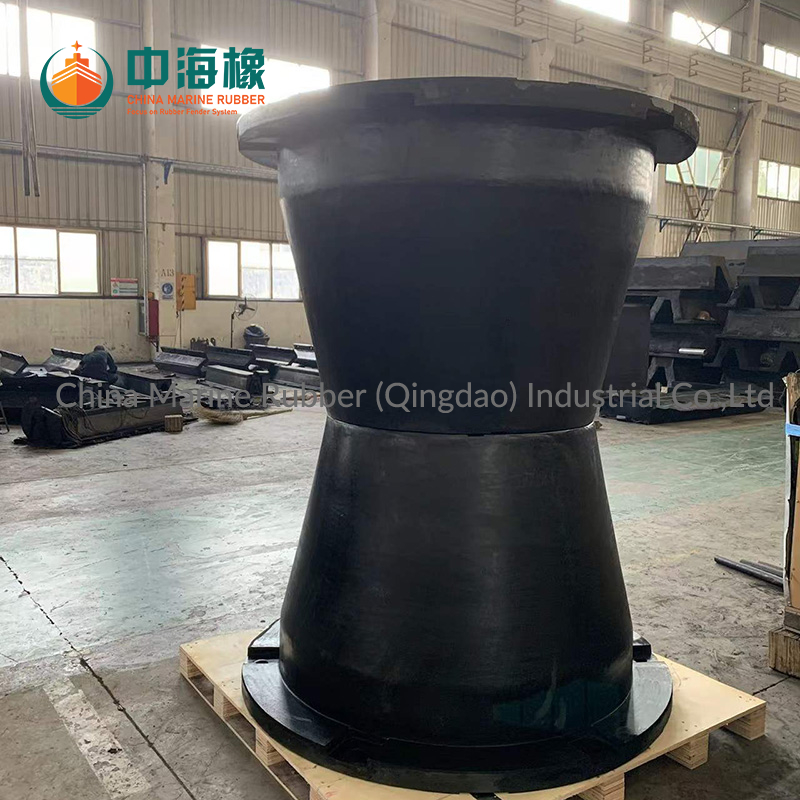
Marine engineers highly value the Super Cone Fender for its exceptional energy absorption-to-reaction force ratio. The geometry allows the rubber to compress deeply. However, the geometric peak of the bare cone creates a severe engineering challenge. It forms an intense focal point of pressure. When a massive ship makes contact, all the reaction force concentrates exactly at this narrow peak.
This point-loading effect creates significant risks for modern vessel fleets. Today, naval architects design container ships, RoRo vessels, and cruise ships to maximize payload capacity. They achieve this by using higher-tensile steel, which results in thinner hull plating. These modern hulls are highly sensitive to concentrated loads. Allowable hull pressures usually fall strictly between 150 to 200 kN/m². Exceeding this allowable threshold leads to permanent hull deformation, punctured plating, or catastrophic structural failure.
The business implications for port operators are immense. Facilities face severe financial liabilities if their berthing systems fail to manage pressure distribution. Damaged ships lead to massive insurance claims. Furthermore, ship captains often refuse to berth at terminals known for substandard fender configurations. A poorly designed system directly damages a port's reputation and operational revenue.
To solve the point-loading crisis, engineers introduce a frontal panel. The rigid steel structure of this panel acts as a protective bridge. It captures the concentrated reaction force pushing out from the rubber cone. The steel frame then spreads this massive energy evenly across the broad, flat surface of the vessel's hull. This simple geometric load distribution prevents hull buckling.
Panel mechanics also play a vital role during high-angle berthing. Ships rarely dock perfectly parallel to the pier. Bow flares and approach angles mean impacts often occur asymmetrically. A properly dimensioned frontal panel ensures the vessel hull maintains flush contact throughout the berthing process. This broad contact area forces the underlying cone fender to compress optimally. It prevents dangerous asymmetrical deflection, which can easily tear the rubber body from its anchors.
Another crucial mechanical function is friction mitigation. Steel rubbing against steel generates massive friction. Therefore, manufacturers bolt low-friction facing pads to the front of the steel structure. These pads utilize UHMW-PE (Ultra-High Molecular Weight Polyethylene).
These pads actively neutralize longitudinal and vertical shear forces. When a ship surges along the berth due to wind, or moves vertically from tidal shifts and cargo loading, it drags against the panel. UHMW-PE pads offer an incredibly low friction coefficient. They allow the ship hull to glide smoothly across the surface. This gliding action prevents lateral shear forces from ripping the rubber fender body apart.
Performance Metric | Bare Rubber System | Panel-Equipped System |
|---|---|---|
Hull Pressure | Highly concentrated at the impact point. Exceeds safe limits for modern hulls. | Distributed evenly across a large surface area. Maintains compliant kN/m². |
Shear Force Management | Rubber grips the hull, absorbing extreme lateral shear. Leads to tearing. | UHMW-PE pads allow the hull to slide, transferring minimal shear to the rubber. |
Angular Berthing | Causes severe asymmetrical deflection and unequal stress distribution. | Forces uniform compression of the rubber, stabilizing the berthing energy. |
Selecting a frontal panel requires careful engineering evaluation. The structural integrity of the panel dictates the safety of the entire system. One of the first decisions involves choosing between closed-box and open-box steel structures.
Engineers widely recognize the structural superiority of closed-box designs for offshore or heavy-duty environments. A closed-box panel features fully sealed internal stiffening plates. This design provides maximum torsional rigidity. It also seals out saltwater, preventing internal corrosion in harsh marine conditions. Open-frame structures use exposed I-beams or channels. They are cheaper and lighter. However, you should only deploy open-frame designs in sheltered, light-duty terminals where wave action and vessel impacts remain low.
Edge geometry is another critical evaluation point. High-performance panels must feature chamfered edges and carefully calculated lead-in angles. Ships often feature protruding beltings, rub rails, or hull irregularities. If a panel has sharp, square edges, a rising ship can snag the top of the panel during a tidal shift. This snagging action can forcefully rip the entire fender system off the pier. Beveled edges on both the steel frame and the UHMW-PE pads ensure the vessel hull deflects safely away from structural catch-points.
Finally, panels must undergo rigorous PIANC compliance and testing. You cannot verify panel strength through visual inspection alone. Evaluating a panel requires reviewing the manufacturer’s structural calculations. Reputable suppliers conduct Finite Element Analysis (FEA). This software modeling simulates vessel impacts to map stress concentrations. Engineers use FEA to prove the panel meets PIANC 2002 guidelines for allowable bending stress. The steel must not exceed its yield strength during maximum rated compression.
While frontal panels solve pressure problems, they introduce new implementation realities. Large steel structures are inherently heavy. This weight creates a significant engineering challenge known as the weight-to-sag ratio. Over time, excessive static weight can cause the rubber cone to droop downward. A drooping Cone Fender loses its horizontal alignment. This misalignment severely reduces its effective compression stroke, degrading its ability to absorb energy safely.
To combat gravity, facilities must integrate an engineered suspension system. You cannot simply bolt the panel to the rubber and walk away. The architecture relies on heavy-duty chain networks to stabilize the massive steel frame.
Weight Chains: These chains carry the vertical load of the steel panel. They anchor to the pier wall above the fender. They prevent the rubber from sagging under the static weight of the panel.
Tension Chains: These chains restrict outward and horizontal movement. When a ship leaves the berth, the compressed rubber violently springs back. Tension chains absorb this rebound force, preventing the panel from overextending.
Shear Chains: These chains prevent excessive lateral shifting. During heavy longitudinal impacts from ship surging, shear chains keep the panel horizontally centered over the rubber core.
Corrosion control presents another inescapable reality in marine environments. The combination of saltwater, oxygen, and structural steel guarantees rapid oxidation. Facilities must specify high-build epoxy coating systems. We strongly recommend coatings that meet C5-M or ISO 12944 standards for very high corrosivity. Furthermore, engineers should consider integrating sacrificial anodes directly onto the back of the steel panel. This provides localized cathodic protection, sacrificing the zinc or aluminum blocks to save the primary steel structure.
Procuring a panel-equipped system demands rigorous quality control. Buying off-the-shelf components exposes your port to catastrophic failure. Every terminal possesses unique environmental and operational characteristics. Use this comprehensive procurement checklist to ensure you specify the exact structural asset your facility needs.
Demand Site-Specific Modeling: Do not accept generic panel dimensions from a catalog. Ensure the supplier provides detailed load calculations based on your exact terminal parameters. They must factor in your specific vessel mix, expected berthing velocities, approach angles, and tidal ranges. Site-specific modeling ensures the panel provides adequate hull coverage under worst-case scenarios.
Verify Component Sourcing: Material purity heavily dictates lifespan. Require material traceability and official mill certificates for all structural steel. Similarly, demand certification for the raw UHMW-PE material. Some suppliers cut costs by using recycled, low-density plastics. Recycled pads wear rapidly, crack under UV exposure, and fail to mitigate friction. Virgin UHMW-PE guarantees superior sliding characteristics.
Evaluate Accessibility for Maintenance: Frontal panels require ongoing inspection. Look for designs prioritizing maintenance accessibility. UHMW-PE pads and suspension chains will wear out eventually. Ensure technicians can easily inspect and unbolt these wear parts from the front or sides. Avoid panel designs that require full system dismantling or extensive, dangerous dive operations just to swap out a friction pad.
Investing in a high-quality marine rubber system represents only half the engineering equation. The frontal panel acts as the critical interface, dictating exactly how safely and effectively kinetic energy transfers from the vessel to the pier. Without optimal load distribution, even the strongest rubber components fail to protect modern fleets.
Port engineers and procurement teams must adopt a "whole-system approach." You should evaluate the core rubber, the steel panel, the UHMW-PE pads, and the suspension hardware as a unified, heavily interdependent structural asset. Neglecting any single component compromises the entire berthing operation. Careful attention to closed-box structural integrity, chain geometry, and site-specific load calculations ensures long-term operational success.
Take action today to secure your terminal infrastructure. We prompt you to request a site-specific fender system audit from a qualified manufacturer. Contact an experienced engineering team for custom panel sizing and comprehensive Finite Element Analysis (FEA) calculations to guarantee your facility remains safe and fully compliant.
A: Replacement typically occurs every 5 to 15 years. This timeframe is highly dependent on terminal traffic volume, vessel types, and local environmental factors. Constant friction causes the material to degrade over time. We recommend conducting routine thickness inspections to track wear patterns before they compromise the underlying steel frame.
A: Yes, retrofitting is possible. However, the existing rubber cone and wall anchor bolts must remain structurally sound. Additionally, you must recalibrate and install a new suspension chain system to safely handle the added weight of the new steel panel. Without adequate chain support, the added mass will damage the older rubber.
A: There is no universal optimal size. Coverage area is calculated dynamically. Engineers divide the maximum reaction force of the specific fender by the lowest allowable hull pressure of the designated vessel. This calculation guarantees adequate load distribution while ensuring a sufficient margin of error for high-angle or eccentric impacts.