Views: 0 Author: Site Editor Publish Time: 2026-08-04 Origin: Site


Cracking around the top flange of a marine cone fender is an early warning sign of catastrophic failure. It risks severe structural damage to both the berth and the vessel. Port operators must treat these visible fissures as critical safety hazards. Left unaddressed, flange cracks severely compromise the system's energy absorption capability. They lead directly to unplanned berth downtime and significant liability risks. Facilities then face expensive emergency replacements under tight operational constraints. Fenders simply cannot protect maritime infrastructure once their core mounting points begin to fail.
This article provides an evidence-based breakdown of why top flange cracking occurs. We explain exactly how to evaluate your current fender integrity. You will learn practical inspection metrics for daily maintenance routines. We also outline the essential engineering criteria for selecting reliable replacement systems. These practical insights will help you prevent sudden equipment breakdowns.
Primary trigger: Excessive shear forces and abnormal berthing angles often exceed the mechanical limits of standard rubber flanges.
Installation risks: Uneven bolt torque and improper seating create concentrated stress points that initiate micro-tearing.
Material degradation: Substandard rubber compounding accelerates ozone and UV aging, causing brittleness in high-stress zones.
The solution: Upgrading to high-quality Super Cone Fenders with embedded steel mounting plates and optimized vulcanization prevents premature flange failure.
A compromised flange prevents the rubber body from compressing evenly. This uneven geometry effectively neutralizes the fender's rated performance. When massive ships berth against the dock, the system fails to absorb kinetic energy properly. The force transfers directly into the concrete pier. Operators often ignore minor cracks initially. However, these small tears quickly alter the compression curve of the rubber unit.
Cascading structural damage follows shortly after initial tearing. The frontal frame relies heavily on the rubber unit for stabilization. Once the top flange loses integrity, this heavy steel panel can detach. It may also droop significantly under its own dead weight. We frequently see damaged units where the steel panel acts as a destructive lever. It rips the remaining rubber away from the concrete anchor points.
The business impacts of these failures escalate rapidly. You must consider several financial realities:
Emergency berth closures halt daily loading operations immediately.
Sudden replacement logistics strain maintenance budgets and require specialized diver teams.
Inadequate kinetic energy absorption leads directly to expensive vessel hull damage claims.
Safety hazards increase for personnel working near compromised mooring structures.
Vessel berthing angles often exceed original design parameters. High-speed approaches or steep angles generate massive lateral friction. These movements create excessive longitudinal and vertical shear forces. The rubber at the fixed mounting point tears under this extreme strain. Rubber handles compression exceptionally well. It does not handle stretching or twisting well. When a ship drags along the frontal panel, the sheer force localizes directly at the top bolts.
Overweight steel frontal panels create continuous downward leverage. This constant gravity load exerts static shear stress on the top flange 24 hours a day. Many initial system designs lack proper weight support chains. They might also lack essential shear chains. Without mechanical chain support, the rubber flange carries the entire physical burden of the steel panel. This constant tension inevitably leads to structural fatigue and deep cracking.
Uneven bolt tightening during initial installation introduces severe risks. Inconsistent torque application creates uneven pressure distribution across the rubber base. Installers sometimes use uncalibrated impact guns instead of proper torque wrenches. Missing washers or incorrect bolt sizes create pinpoint pressure zones. These highly concentrated stress points initiate localized micro-tearing. Once a micro-tear begins, cyclic loading from daily vessel traffic expands the crack rapidly.
Manufacturers sometimes use cheap fillers or recycled materials. These substitutions drastically lower tensile strength and tear resistance. Substandard rubber cannot survive marine environments. Environmental degradation accelerates the breakdown process. Continuous exposure to UV rays, ozone, and harsh saltwater causes the rubber compound to harden. Ozonolysis attacks the polymer chains directly. The material becomes brittle and cracks easily under heavy cyclic loading.
The following failure analysis matrix highlights these common mechanisms and their direct indicators.
Failure Mode | Root Cause | Visual Indicator |
|---|---|---|
Shear Tearing | Abnormal berthing angles | Deep horizontal fissures near bolts |
Static Sagging | Missing support chains | Frontal panel drooping downwards |
Pinpoint Stress | Uneven bolt torque | Cracks radiating from specific washers |
Brittle Fracturing | Poor rubber compounding | Alligator-skin crazing on flange surface |
Maintenance teams need structured evaluation methods for marine hardware. Surface crazing differs significantly from deep structural fissures. Minor ozone crazing appears as shallow, web-like patterns. Deep fissures penetrate the rubber matrix and compromise internal strength. You must also look for rust bleeding. Orange or brown stains weeping from the flange indicate moisture has reached the internal steel plates. Rust expansion destroys the rubber-to-metal bond.
Deformation tracking provides measurable data on equipment health. You should measure permanent set or sagging in the rubber body. Compare the current resting geometry against the original manufacturing drawings. A drooping panel indicates continuous flange strain. Track these measurements monthly. Rapid changes in the physical profile usually precede a complete blowout.
Establish clear thresholds for immediate replacement. A cracked Cone Fender requires urgent action when certain conditions appear. Do not monitor systems exhibiting dangerous fatigue. Follow these critical inspection rules:
Replace the unit if cracks penetrate deeper than 10% of the flange thickness.
Remove the unit if rust weeping is visible around multiple anchor bolts.
Replace immediately if the frontal frame sags more than five degrees from vertical.
Monitor closely if only surface-level ozone crazing is present.
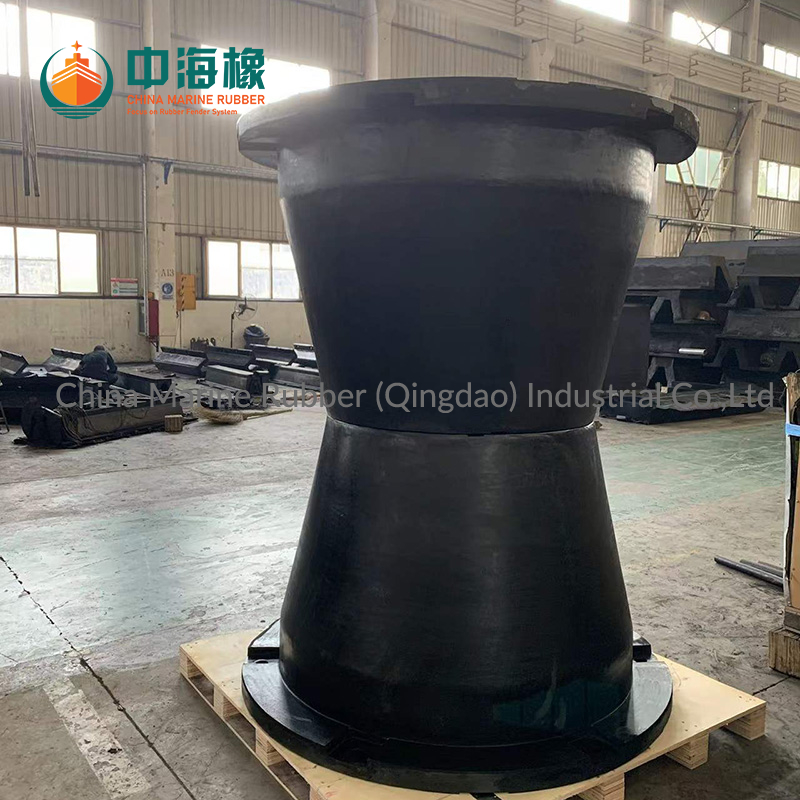
The geometric profile of a Super Cone Fender distributes stress more efficiently. It outperforms standard legacy profiles significantly. The conical shape guides compressive forces away from the mounting flanges. Energy moves smoothly through the main body instead. This geometry allows the unit to buckle inward evenly. The design minimizes lateral stretching at the rigid anchor points. This fundamental shape improvement extends operational lifespans dramatically.
Embedded steel reinforcement is absolutely necessary for modern port operations. High-quality systems feature fully encapsulated steel plates within the mounting flange. This internal metal skeleton prevents bolt pull-through during extreme shear events. It distributes fastening torque evenly across the entire base. Without this internal plate, anchor bolts easily tear through soft rubber. Encapsulation also protects the steel from corrosive seawater.
Optimized shear chain configurations protect the rubber from static loads. Adding or re-engineering weight and shear chains is crucial. Chains shift the massive static load off the rubber flange. They transfer this weight directly to the concrete anchor points. Proper chain tension ensures the fender only handles dynamic compression forces. Chains must cross at precise angles to mitigate both vertical drop and horizontal sliding.
Insist on suppliers providing transparent testing data. Manufacturers must verify their products through independent third parties. Testing should adhere strictly to PIANC 2002 guidelines. Evaluate both Constant Velocity (CV) and Constant Clearance (CC) testing methods. Reliable data proves the rubber can absorb the stated energy. Never accept internal lab reports without external certification stamps.
Evaluate manufacturers based on their rubber compounding transparency. Ask for documentation regarding raw material origins. High-quality suppliers utilize automated internal mixing processes. Automation ensures absolute compound consistency across different production batches. Manual mixing often results in carbon black clumping. Poor mixing creates weak spots inside the final rubber product. Traceability protects your infrastructure investment.
Look for vendors providing comprehensive engineering and customization support. They should calculate complete system dynamics for your specific berth. Excellent suppliers analyze the rubber unit, panel weight, and chain angles together. They treat the installation as an integrated mechanical system. Avoid companies merely selling off-the-shelf rubber units. Complex marine environments require precise site-specific engineering analysis.
Assess the commercial terms carefully before purchasing. Investigate what environmental or operational failures the manufacturer covers. True lifecycle guarantees demonstrate product confidence. Review the warranty clauses regarding ozone degradation and shear tearing. Strong warranties usually indicate excellent vulcanization processes and superior material selection. Protect your budget by securing binding performance agreements.
Top flange cracking represents a complex, multi-factor engineering challenge. It rarely stems from a single isolated incident. Breakdowns occur through a combination of severe mechanical stress, improper installation practices, and degraded material quality. Identifying these warning signs early prevents minor cracks from causing major structural failures.
Mitigating these operational risks requires sourcing well-engineered equipment. You must install systems tailored specifically to your berth's unique traffic profile. Prioritize units featuring embedded steel plates and verified rubber compounds. Proper chain configurations remain equally important for long-term survival.
We encourage port engineers and procurement managers to act proactively. Request a comprehensive technical audit of your existing mooring infrastructure today. Reach out to verified manufacturers for a custom quotation on high-performance replacement systems. Protecting your facility now prevents catastrophic downtime tomorrow.
A: No. Once structural tearing occurs at the mounting flange, the integrity of the fender is compromised completely. You cannot reliably patch or vulcanize these high-stress zones on-site. The internal mechanical bonds are broken forever. Immediate replacement is necessary to ensure safe berthing operations.
A: With high-quality rubber compounding and correct installation, they typically last 10 to 15 years. Lifespans vary heavily based on vessel traffic frequency, berthing velocity, and environmental harshness. Regular maintenance and proper chain tensioning maximize this operational window.
A: Drooping is usually caused by inadequate weight support chains or excessive steel panel weight. It also indicates a failing top flange that can no longer support the heavy static load. You must inspect the chains and rubber mounting points immediately.
A: It features a unique conical body shape. This specific geometry allows for higher energy deflection, reaching up to 72% compression. It handles severe shear forces much better. The design distributes stress efficiently without straining the flange as aggressively as standard cell fenders.