Views: 0 Author: Site Editor Publish Time: 2026-07-29 Origin: Site


Modern marine terminals handle massive vessels requiring highly efficient energy absorption. A Super Cone Fender serves as the primary defense line against immense berthing forces. However, marine rubber compounds have strict physical limitations. Extreme berthing events often push this rubber far beyond its maximum designed deflection. Excessive vessel speed, severe weather conditions, and oversized cargo ships create unpredictable impact loads. These extreme scenarios expose terminal infrastructure to serious mechanical risks.
We introduce overload stops as a critical, fail-safe engineering mechanism. They strictly prevent catastrophic structural failure during severe impact events. These physical systems protect vital wharf infrastructure by limiting mechanical stress. They also extend the overall lifespan of expensive marine fender systems. You will learn how engineers calculate compression limits and design physical barriers to protect these assets. We will explore different configurations, risk mitigation strategies, and maintenance protocols required to keep your marine terminal completely safe.
Overload stops mechanically prevent a cone fender from compressing beyond its maximum rated deflection (typically 70–72%).
Without an overload mechanism, excessive compression can cause irreversible shear damage to the rubber body and dangerous load spikes on the wharf.
Configurations typically include internal steel stoppers or external chain systems, chosen based on specific port conditions and terminal engineering constraints.
Specifying overload stops requires balancing upfront installation costs against the long-term ROI of asset protection and risk mitigation.
Manufacturers design every cone fender to handle a specific maximum deflection limit. This critical threshold usually peaks at 72% of the original rubber height. Operating within this compression zone ensures optimal energy absorption. The rubber geometry safely compresses and bulges to dissipate the kinetic energy of an approaching vessel. The vulcanized rubber matrix handles this repeated flexing exceptionally well under normal conditions. However, pushing past this threshold changes the physical dynamics entirely.
When berthing energy exceeds the design capacity, the rubber experiences severe over-compression. Internal stresses multiply rapidly inside the fender body. The rubber begins buckling under the extreme load instead of flexing uniformly. This sudden deformation causes a massive loss of energy absorption efficiency. The reaction force spikes dramatically, turning a flexible cushion into a rigid obstacle. You must understand this transition point to prevent catastrophic system failure. Ignoring these material limits invites immediate structural rupture.
This problem extends far beyond mere fender damage. When a Cone Fender bottoms out, the unabsorbed kinetic energy looks for a new path. It transfers directly into the concrete pier. This violent shock load risks severe concrete spalling along the wharf face. It can also cause deep structural fracturing in the subsea piles. Protecting the pier requires limiting how far the rubber can physically compress. An over-compressed fender essentially acts as a battering ram against your own dock.
Common Mistake: Terminal operators often assume larger fenders negate the need for mechanical stops. Even the largest rubber units remain vulnerable to accidental vessel surges if left unrestrained.
Overload stops act as a final line of defense during severe berthing operations. This mechanical intervention serves a simple but highly vital function. It acts as a rigid physical barrier. It engages exactly at the safe compression limit of the fender. The stop remains completely inactive during normal, everyday berthing maneuvers. It only activates when abnormal impacts threaten to crush the rubber unit entirely.
Load distribution changes instantly once the overload stop engages. The stop absorbs the residual kinetic energy from the vessel. It bypasses the vulnerable rubber cone entirely. The energy then transfers safely into the robust mounting structures behind the fender panel. Engineers design these specific mounting points to handle direct, heavy loads. This bypass mechanism prevents the rubber from suffering irreversible tearing or compression set. It preserves the elastic memory of the compound.
These stops also prevent severe horizontal shear damage. Chain systems excel at mitigating excessive horizontal loads. Friction between the vessel hull and the frontal pad creates massive shear forces. Longitudinal movement during berthing drags the panel sideways along the wharf. A properly configured overload system restricts this dangerous lateral movement. It keeps the rubber body perfectly aligned and prevents tearing at the mounting flanges.
Best Practice: Always calibrate the overload stop engagement gap to precisely match the manufacturer's recommended deflection mark. A premature engagement causes unnecessary shock loads, while a late engagement fails to protect the rubber.
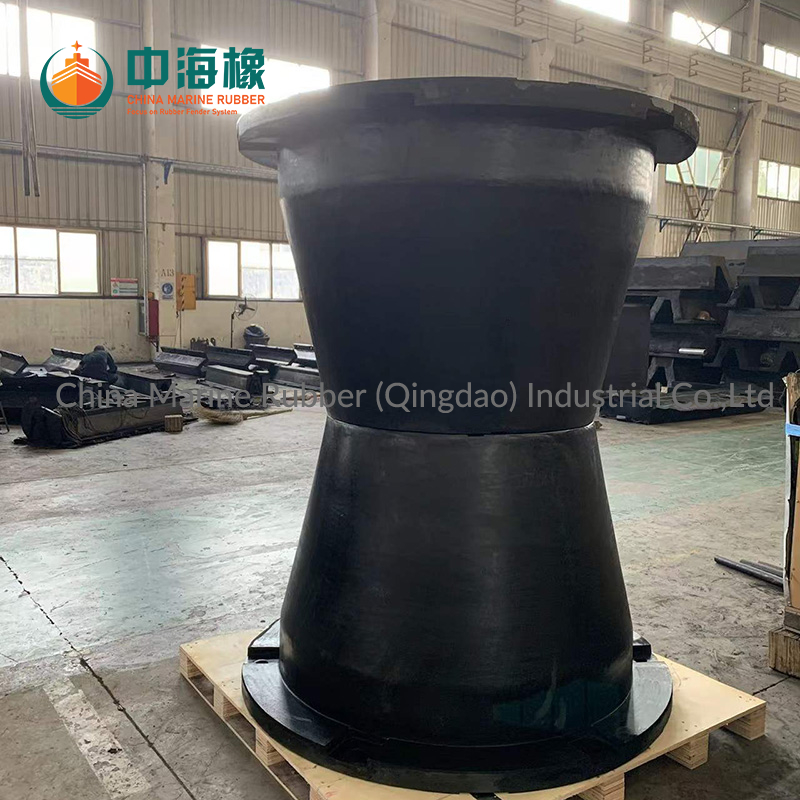
Engineers typically choose between two primary configurations to protect a Super Cone Fender. Each mechanical design offers unique advantages depending on the terminal environment and vessel traffic.
Internal stoppers consist of heavy-duty steel pipes or thick-walled tubes. Installation teams place them directly inside the hollow cavity of the cone. They attach securely to the frontal frame and extend backward toward the pier.
This mechanism works best for direct, straight-line compression impacts. It offers a highly space-efficient design. It does not clutter the exterior of the fender system. However, this setup requires precise alignment during installation. Misaligned internal pipes can cause severe internal binding during compression. This binding can tear the rubber from the inside out. They provide minimal protection against lateral shear forces.
External systems utilize heavy-duty galvanized chains. These chains connect the steel frontal panel directly to the concrete wharf. Engineers configure them in various geometry patterns to handle specific force vectors.
This configuration excels at mitigating complex, multi-directional forces. It handles angular berthing impacts exceptionally well. The chains manage tension, weight, and shear loads simultaneously. The downside involves higher routine maintenance requirements. The chains suffer from constant external exposure to seawater, wind, and salt spray. Moving parts also require regular inspection for mechanical wear and tear.
Choosing the right system requires analyzing specific operational parameters. You must rigorously evaluate vessel types, tidal variations, and expected approach angles. A dedicated selection framework helps clarify this complex decision process for marine engineers.
Evaluation Criteria | Internal Central Stoppers | External Chain Systems |
|---|---|---|
Primary Load Mitigation | Direct perpendicular compression | Multi-directional and shear forces |
Space Efficiency | High (contained within rubber body) | Low (requires external anchor points) |
Maintenance Needs | Low (shielded from direct weather) | High (exposed to marine environment) |
Installation Complexity | Requires precise internal alignment | Requires robust concrete anchor embeds |
Ideal Port Environment | Sheltered terminals, predictable impacts | Exposed offshore terminals, high tides |
Terminal operators often ask if they truly need this extra hardware. A thorough cost-benefit analysis usually provides a very clear answer. We compare the relatively low capital expenditure (CapEx) of integrating an overload stop system. We weigh this expense against the massive financial risk of premature fender failure. Replacing a ruptured cone fender costs significantly more than the initial stopper installation. Furthermore, a failed fender can cause severe vessel hull damage. The resulting liability claims far outweigh the cost of these mechanical fail-safes.
Marine engineering projects must also adhere to strict global industry standards. The PIANC guidelines provide authoritative recommendations regarding abnormal impact considerations. PIANC mandates robust safety factors in modern marine terminal design. Designers must carefully account for accidental berthing velocities and unusual approach angles. Incorporating a physical fail-safe demonstrates clear compliance with these international safety standards. It proves you have engineered the system to handle worst-case scenarios responsibly.
A simple decision matrix helps determine when these mechanisms become strictly mandatory versus optional. Evaluating your specific terminal conditions ensures proper capital allocation.
Mandatory Environments: Exposed offshore terminals require stringent overload protection. High-velocity tidal zones create unpredictable berthing angles. Heavy bulk handling facilities experience massive, relentless kinetic loads. You must install overload mechanisms in these harsh conditions to prevent rapid deterioration.
Standard Commercial Ports: Sheltered container terminals face slightly lower risks. Tugs usually control the berthing process precisely in calm waters. However, engineers still highly recommend overload stops as an affordable, long-term insurance policy for the infrastructure.
Installing a Super Cone Fender with an overload stop requires strict adherence to engineering protocols. Execution matters just as much as the initial design. Poor installation nullifies the benefits of the most advanced equipment.
You must respect strict engineering tolerances during the installation phase. An improperly aligned internal stop poses a severe operational risk. It can easily cause the very damage it is meant to prevent. If the steel pipe sits off-center, it will scrape the inner rubber wall during compression. Surveyors must verify the exact alignment coordinates before tightening the mounting bolts. Every millimeter matters when dealing with massive kinetic reaction forces.
The marine environment ruthlessly attacks exposed steel components. Discussing material durability remains a top engineering priority. High-grade anti-corrosion treatments are absolutely necessary for longevity. You should specify hot-dip galvanizing for all chains, shackles, and internal stoppers. Components exposed to the aggressive splash zone require additional protection. Marine-grade epoxies provide an excellent secondary barrier against saltwater corrosion. Neglecting these specifications guarantees premature structural decay.
Maintenance teams must follow rigorous, actionable inspection schedules post-installation. We recommend implementing the following routine checks to ensure continuous safety and performance.
Check Chain Tension: Inspect external chains for excessive slack or uneven tension. Loose chains allow too much lateral panel movement during berthing.
Inspect Anchor Points: Examine the concrete around the cast-in anchors. Look for hairline cracks or signs of pull-out stress after severe storms.
Evaluate Internal Stoppers: Use specialized cameras or physical entry to inspect internal pipes. Look for severe rust accumulation or impact deformation.
Examine Shackle Pins: Verify they remain tightly secured and correctly pinned. Vibrations from repeated vessel impacts can slowly loosen hardware over time.
Monitor Coating Integrity: Spot-check the epoxy and galvanizing layers. Schedule immediate touch-ups if you discover bare steel exposed to the salty air.
An overload stop remains an essential insurance policy for modern marine terminals. It preserves the structural integrity of both the fender unit and the wharf facility. Limiting deflection strictly prevents catastrophic rubber failure during extreme vessel impacts. It ensures your critical infrastructure survives unpredictable operational errors and harsh weather conditions.
We advise all buyers to exercise deep due diligence during the procurement phase. You should always demand transparent performance curves from your manufacturers. Request comprehensive limit-state testing data before finalizing your purchase orders. This data definitively verifies the exact engagement point of the mechanical stops under actual load.
Stakeholders must take proactive steps to secure their waterfront investments. We strongly encourage you to consult with qualified marine engineers immediately. They can conduct a comprehensive dynamic mooring analysis for your specific site. This analysis will help you size the absolute correct overload mechanism for your project.
A: The rubber structure will suffer permanent deformation, tearing, or complete rupture, rendering the fender useless and transferring dangerous shock loads to the pier.
A: External chain systems can often be retrofitted if the frontal panel and wharf have adequate anchor points, but internal stoppers must typically be integrated during the initial manufacturing and design phase.
A: No. Properly designed overload stops remain completely disengaged during normal operation and only make contact when the fender reaches its maximum safe deflection limit.