Views: 0 Author: Site Editor Publish Time: 2026-06-04 Origin: Site


Modern ports face immense pressure. Shipping vessels grow larger every year. Berthing velocities continue to increase. Port operators must accommodate these heavier loads safely. Existing infrastructure often struggles under these new demands. You simply cannot overstress aging concrete dock walls. We need high-performance marine energy absorption systems to solve this exact issue.
The cone fender emerged as the current industry standard to tackle this challenge. It provides unmatched performance in demanding maritime environments. This geometry handles massive kinetic energy better than older designs.
You will discover critical evaluation criteria for modern fendering systems below. We will examine essential structural components and strict compliance standards. Finally, you will learn the necessary procurement logic required for capital port projects. Proper selection ensures port safety and operational efficiency.
Optimal Efficiency: Cone fenders provide the highest energy absorption-to-reaction force ratio among standard marine fenders.
Angular Performance: Advanced variations, such as the Super Cone Fender, maintain stability and energy absorption even under severe angular berthing impacts.
System Complexity: A successful installation relies on more than the rubber cone; it requires properly specified frontal panels, UHMW-PE pads, and restraint chain configurations.
Compliance is Mandatory: Legitimate procurement requires strict adherence to PIANC 2002 guidelines and verifiable third-party testing.
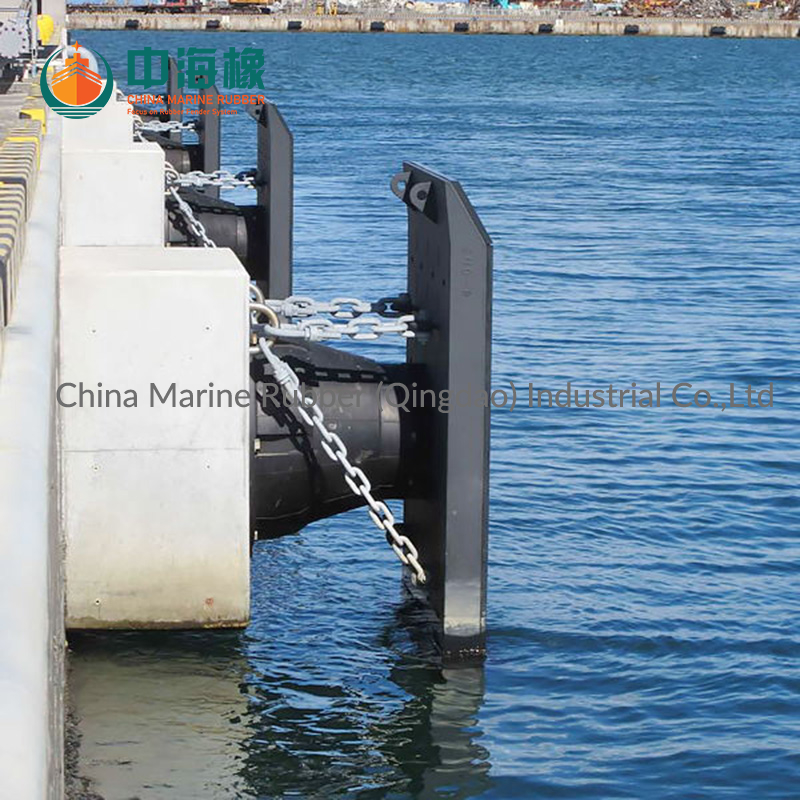
Marine fendering systems evolved significantly over the last century. Early docks relied on simple timber logs. Engineers later introduced cylindrical rubber designs. These early models offered basic protection. However, they lacked deep compression capabilities. The industry then shifted to cell fenders. Cell designs performed well but reached their deflection threshold at roughly 52.5%. Port engineers needed higher capacity. They developed the conical body shape. This new geometry allows up to a 70% deflection threshold. It provides massive energy absorption without increasing the rubber footprint.
The Super Cone Fender represents the modern iteration of this concept. It boasts a highly refined geometry. The specialized shape resists extreme shear loads beautifully. It prevents structural buckling better than any legacy system. The conical profile compresses inward upon impact. This mechanism stabilizes the entire structure during extreme load events.
Upgrading to these advanced systems solves a massive business problem. Ports invest millions in capital infrastructure. Vessel hulls and concrete dock walls represent enormous assets. Upgraded fenders protect these investments from catastrophic impacts. They also minimize port downtime. Damaged infrastructure halts loading operations immediately. Lost operational hours cost terminals heavily. Preventing infrastructure damage ensures continuous revenue flow.
Engineers evaluate fendering systems across several strict performance dimensions. Energy absorption versus reaction force represents the primary metric. You must maximize energy absorption during a berthing event. At the same time, you must keep the reaction force strictly below the dock's structural limit. High reaction forces transfer destructive shockwaves into the concrete. This causes micro-fractures. It degrades the dock over time.
Angular berthing resilience is another crucial evaluation factor. Vessels rarely approach the dock perfectly parallel. Wind and currents push them. They often hit the fender at angles up to 10 or 20 degrees. The conical shape maintains high performance during these angled approaches. The flared base prevents localized stress concentrations. It distributes the impact load smoothly across the rubber body.
Durability matters immensely in marine environments. You must evaluate the material properties carefully. Fenders face brutal lateral forces daily. They endure intense UV exposure. Saltwater degradation breaks down inferior rubber compounds rapidly. A properly specified system must withstand these elements over a 15 to 20-year lifecycle.
Performance Comparison Chart: Standard Fender Types | |||
Fender Type | Max Deflection Limit | Energy Efficiency Ratio | Angular Resilience |
|---|---|---|---|
Cylindrical | 50% | Low | Poor |
Cell Fender | 52.5% | Moderate | Moderate |
Standard Cone | 70% | High | Excellent |
Super Cone Fender | 72%+ | Very High | Superior |
The rubber cone acts as the primary energy absorber. Manufacturers blend natural and synthetic rubber compounds to create it. Natural rubber provides excellent elasticity. Synthetic additives increase weather resistance. The vulcanization process dictates the final strength. Engineers cure the rubber under immense pressure and heat. Strict manufacturing tolerances apply here. Poor curing creates internal air pockets. These defects lead to premature compression failure.
A steel frontal panel caps the rubber body. It plays a highly structural role. The panel distributes reaction forces evenly across the vessel’s hull. This lowers the overall hull pressure. It prevents denting on thin-skinned vessels. Manufacturers usually build these panels as closed-box steel structures. Marine environments demand strict anti-corrosion requirements. Engineers specify thick epoxy coatings. They also integrate cathodic protection systems. These measures stop saltwater rust completely.
Ultra-High Molecular Weight Polyethylene pads bolt onto the frontal panel. They face the ship directly. These pads reduce the friction coefficient immensely. Low friction prevents the ship from dragging the fender sideways. Excessive drag creates dangerous shear stress on the rubber cone. UHMW-PE pads sacrifice themselves over time. You replace them periodically to protect the permanent steel and rubber structures.
Large fendering systems require heavy-duty chain networks. They control the movement of the steel panel during impacts.
Weight Chains: These chains support the massive dead weight of the steel frontal panel. They prevent the rubber body from sagging downward over time.
Shear Chains: These chains restrict lateral movement. When a ship slides along the dock, shear chains stop the panel from shifting too far sideways.
Tension Chains: These chains limit outward deflection. When a ship pulls away, it can create a suction effect. Tension chains prevent the rubber cone from stretching outward beyond its design limits.

Proper system sizing requires accurate berthing energy calculations. Engineers use several specific inputs to determine kinetic energy. Vessel displacement serves as the baseline weight. Berthing velocity represents the approach speed. Engineers also apply an eccentricity factor. This accounts for the rotation of the ship upon impact. Water clearance determines how much water moves along with the vessel. You must calculate all these factors correctly. A mistake here leads to undersized, dangerous fendering.
Global authorities rely on PIANC 2002 guidelines. Legitimate procurement mandates strict adherence to the "Guidelines for the Design of Fender Systems: 2002." This document standardizes how manufacturers test and report rubber performance. You should automatically disqualify manufacturers who ignore PIANC protocols. Their data remains unverified and inherently risky.
You must apply correction factors to base performance curves. Manufacturers test rubber in perfect factory conditions. Real docks experience extreme conditions. Cold temperatures make rubber stiffer. This increases reaction forces. High impact velocities change compression dynamics. Angular impacts reduce total energy absorption. You apply temperature, velocity, and angular correction factors to predict real-world behavior accurately.
Impact of PIANC Correction Factors | |||
Factor Type | Condition Evaluated | Impact on Energy Absorption | Impact on Reaction Force |
|---|---|---|---|
Temperature Factor (TF) | Extreme Cold Environments | Decreases slightly | Increases significantly |
Velocity Factor (VF) | High Approach Speeds | Increases slightly | Increases moderately |
Angular Factor (AF) | Vessel Approach Angles > 10° | Decreases moderately | Decreases slightly |
The installation of these systems involves complex logistics. A cone fender assembly carries massive weight. The footprint spans several square meters. Contractors outline specialized lifting equipment months in advance. Barges and heavy-duty cranes position the units over the water. Staging must operate flawlessly to avoid delays. Anchor bolt alignment demands incredible precision. Even millimeter deviations prevent the frontal panel from seating correctly on the rubber base.
Anchor system integrity dictates the lifespan of the installation. Port engineers evaluate two primary anchoring methods. Cast-in U-anchors offer the strongest hold. You pour them directly into new concrete during dock construction. Chemical resin anchors serve retrofit projects better. You drill them into existing concrete structures. You must factor in the current condition of the concrete dock. Weak, degrading concrete will pull out under high reaction forces. Engineers must perform core strength tests beforehand.
You will face several maintenance roadblocks over the system's life. Identifying common points of failure saves repair budgets.
Wearing of UHMW-PE Pads: Constant friction shaves down the polyethylene surface. Once they wear too thin, exposed steel damages vessel hulls.
Chain Tension Degradation: Turnbuckles loosen over years of impacts. Sagging chains fail to support the frontal panel mass.
Corrosion of Steel Panels: Scratches compromise the epoxy coating. Saltwater penetrates the metal and causes rapid rust expansion.
Anchor Bolt Loosening: Vibration backs out massive securing nuts. You must re-torque them to specified values annually.
Selecting the right vendor protects your capital project. You must establish strict evaluation boundaries. Material traceability acts as your first filter. Demand detailed material certificates from all bidding manufacturers. They must supply batch testing reports for the raw rubber compounds. They must also verify the steel grades used in the frontal panels. Untraceable materials often indicate recycled rubber usage. Recycled rubber fails unpredictably under heavy compression.
You must establish the expectation for full-scale physical testing. Some vendors rely purely on theoretical FEA (Finite Element Analysis) models. Computer models look impressive but lack real-world verification. Demand Constant Velocity Testing (CVT). The manufacturer must place a full-sized rubber unit into a massive hydraulic press. They must compress it at a constant speed according to PIANC standards. This physical proof guarantees structural integrity.
Recommend taking proactive next-step actions before the final bid. Request a customized mooring and berthing energy analysis from your shortlisted vendors. Qualified manufacturers employ in-house engineering teams. They will run your port data through their software. They will recommend specific dimensions based on your exact tidal ranges and vessel fleet. You should only issue a final RFQ once you receive and validate these custom calculations.
Modern port operations demand uncompromising safety and efficiency. Cone fenders represent a high-efficiency, reliable solution for these demanding maritime environments. Their advanced geometry absorbs massive kinetic energy safely. They distribute forces evenly, protecting aging concrete docks and valuable vessel hulls. However, these systems only succeed when engineers specify and install them correctly.
Port engineers and procurement teams must take deliberate action. First, consult with specialized maritime engineering teams early in your design phase. Second, validate your berthing energy calculations using multiple vessel scenarios. Third, specify precise structural dimensions and demand full PIANC compliance from vendors. Protect your infrastructure by insisting on verified, tested performance.
A: A cell fender reaches its maximum deflection limit at approximately 52.5%. A cone fender compresses much deeper, reaching a 70% deflection limit. This conical geometry creates a significantly higher energy absorption-to-reaction force efficiency ratio. The cone shape also handles angular vessel impacts far better than cylindrical cell designs.
A: A properly specified unit lasts between 15 and 20 years. Lifespan depends heavily on environmental conditions and maintenance frequency. High UV exposure and extreme saltwater salinity accelerate wear. Regular replacement of UHMW-PE pads and prompt chain tensioning can extend the system's operational life well past two decades.
A: All rubber fenders lose energy absorption capacity at extreme angles. However, the conical geometry mitigates this performance drop-off better than alternative designs. The wide base and flared body allow the rubber to compress asymmetrically without tearing. This prevents localized stress concentrations during 10 to 20-degree approach angles.
A: Yes, contractors retrofit them frequently. Engineers use chemical resin anchors drilled into the existing concrete. You must carefully match the new anchor bolt template to the available solid concrete spacing. You must also ensure the legacy dock structure can handle the specific reaction forces generated by the new rubber system.